
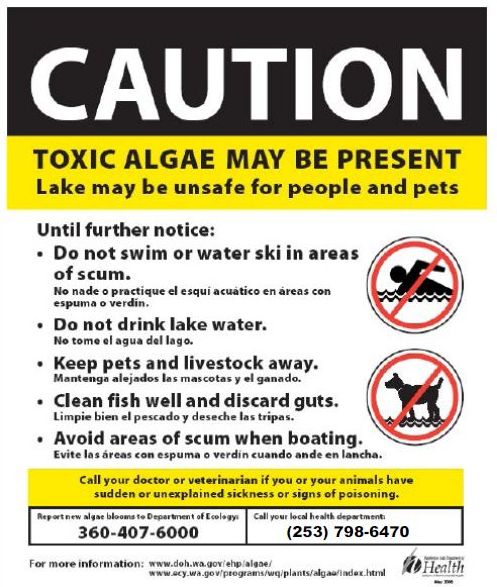
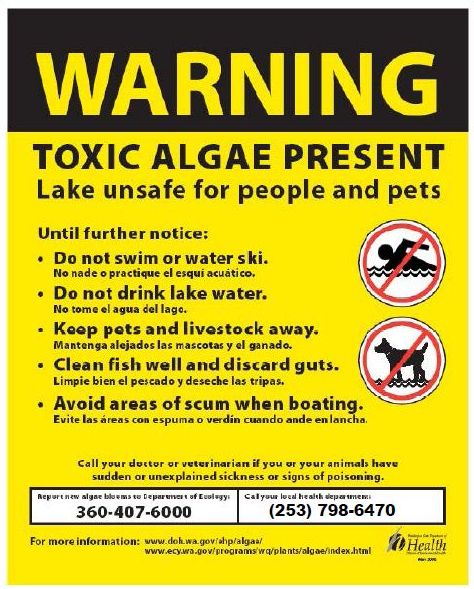
On September 25, 2012, Spanaway Lake was added to the list of toxic algae advisories by the Tacoma Pierce County Health Department (TPCHD). Other local lakes also have cautionary advisories and Waughhop Lake has a toxic algae warning which is a more severe level. You will see posters like the ones in the photos for the two different levels, advisory or warning.
Spanaway Lake has an advisory, which means humans and pets should stay out of the water around the affected areas. Lakes with advisories are generally checked weekly until advisory is lifted.
Here are the lakes that TPCHD has listed as having toxic algae issues:
- Waughop Lake, Toxic AlgaeWarning Advisory, Updated August 3, 2012
- Harts Lake, Toxic AlgaeCaution Advisory, issued June 8, 2012
- Bay Lake, Toxic Algae Caution Advisory, issued August 31, 2012
- Ohop Lake, Toxic Algae Caution Advisory, issued September 13, 2012
- Tanwax Lake, Toxic Algae Caution Advisory, issued September 18, 2012
- Steilacoom Lake, Toxic Algae Caution Advisory, issued September 19, 2012
- Spanaway Lake, Toxic Algae Caution Advisory, issued September 25, 2012
Lake advisory updates are available via e-mail by clicking hereand selecting Surface Water Advisories.
Here is information from the health department web site:
Toxic Algae
Some toxic algae, also known as cyanobacteria or blue-green algae, can produce toxins. These toxins may kill pets, waterfowl, and other animals. They can also cause serious illness or even death in people. Toxic algae are naturally occurring but likely have increased due to impacts from human activities.
What Is A Toxic Algae Bloom?
Toxic algae can reproduce rapidly in fresh water when the amount of sunlight, temperature and nutrients are sufficient. Within a few days a “clear” lake, pond or ditch can become discolored with algae growth. This is called a bloom. Toxic algae blooms often float to the surface and can form a surface scum. This scum, or heavy concentration of algae, can look like green paint and be several inches thick near the shoreline (click here for an example). Wind and weather conditions can greatly change the amount and location of algae.
A heavy concentration of Toxic algae:
•Often looks like green paint floating on the surface of the water (click here for an example).
•Look like small dots in the water that are hard to pick up or hold.
•Can be many shades of green, bluish, brownish or reddish green.
•Most commonly occurs in the summer and fall but can occur any time.
Symptoms:
Swallowing lake water containing toxic algae or prolonged skin contact may result in illness, such as muscle weakness, vomiting, diarrhea, and/or nausea. If you know or believe someone may have swallowed water containing large amounts of algae, it is extremely important to seek medical attention.
Toxic algae can cause a skin rash that develops after being in the water. This is a different rash then that caused by Swimmer’s Itch.
The risk to pets is much greater than the risk to people, both due to the smaller body sizes of pets and to a pet being more likely to drink water containing a heavy concentration of algae. If a pet does ingest a large amount of algae and is showing signs such as vomiting, lethargy, disorientation, or seizures, it should be taken to a veterinarian as soon as possible.
What If I See An Algae Bloom?
As soon as you notice an algae bloom or possible signs of poisoning:
•Keep children and pets away from areas that have a moderate or heavier amount of algae (Looks like green paint).
•Do not swim, wade, fish, or water ski in areas that have a moderate or heavier amount of algae (looks like green paint).
•Keep all pets and livestock away from the water.
For more information, or to report a suspected algae bloom, please call the Health Department at 253 798-6470 or e-mail us at EHSurfaceWater/Shellfish@tpchd.org.
Related Docs
Related Links
This is from an email from TPCHD sent to people who live near the Spanaway Lake:
Toxic Algae Present at Spanaway Lake
September 25, 2012
There currently is a toxic algae bloom in Spanaway Lake. A toxic algae bloom is easily identified by the unusual color or appearance to the water. Usually a bloom makes the lake surface green, looking like pea soup or green paint, but sometimes the bloom is a different color. Wind and rain can greatly change the amount and location of algae in the lake. To help you make decisions about recreational use of the lake, the health department recommends you follow these precautions:
Keep children and pets away from areas that have a moderate or heavier amount of algae
Do not swim, wade, water ski, or fish in areas that have a moderate or heavier amount of algae
Swallowing lake water containing algae or prolonged skin contact with diarrhea, and/or nausea. If you know or believe someone may have swallowed water containing large amounts of algae, it is extremely important to seek immediate medical attention.
The risk to pets is much greater than the risk to people, both due to the smaller body sizes of pets and to a pet being more likely to drink water containing a heavy concentration of algae. If a pet does ingest a large amount of algae and is showing signs such as vomiting, lethargy, disorientation, or seizures, it should be taken to a veterinarian as soon as possible.
Excessive nutrients from fertilizers, animal and human waste can run off into lakes and contribute to algae growth. Reducing use of fertilizers, maintaining septic systems, and properly disposing of pet waste helps improve water quality in lakes, streams, groundwater, and the Puget Sound.
For further information, please call Ray Hanowell at (253)798-2845 or Lindsay Tuttle at 9253)798-3530, or visit our website at http://www.tpchd.org/ and search for “toxic algae”.
 Pierce Prairie Post