
By Marianne Lincoln
One of my favorite annual events is taking the tour of Fort Lewis put on by the Nisqually Tribe. Amazing history, great snacks and good company. Although the tour enters and exits from a normally locked gate on the reservation, much of the driving is along Eastgate Road. It is called that because is exits on the east side of the military base onto SR507. It is also not far from where Muck Creek crosses SR507. There is good reason for that proximity.
Flipping through an historical society page on diversity and monuments, I found this one, listed to be modified for diversity and inclusion. I thought I should give some of that context.
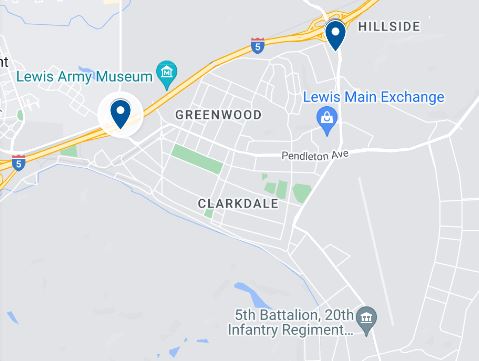
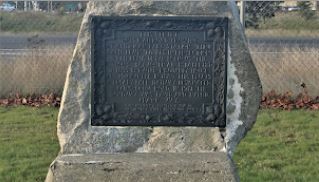
“Historical Road Number One: This street from railroad crossing at American Lake Station, thru Camp Lewis to its intersection with Lewis Drive-follows the Hudson’s Bay Co. trail established in 1833 between Nisqually House and Muck Creek. In 1889 this became a legal state highway, designated Huggin-Gregg Road. In 1917 the roadway was paved and named Clark Way. | This monument erected in 1918 by the Washington State Historical Society”
Animal trails often become paths for humans, in this case, the indigenous people of the area. When Fort Nisqually was sited, it was near the Nisqually settlement, but on the bluff above the mouth of Sequalitchew Creek. Due to the need for workers, the Fort employed many Native Americans. Some worked a day or two, some stayed around for years, a few married the men at the Fort. They were paid in food, supplies or blankets. This was before any treaties or reservations were established. The local people were nomadic to a small extent. In different seasons, they travelled from the waterfront, to camps in the prairie, to the mountains for berries, or over the mountains to the Yakima area.
Of course, one of those routes was a road from Sequalitchew Creek to the prairie to pick camas and hunt elk and deer. Fort Nisqually established their first farming station near where Muck Creek crosses SR507 and the road there was eventually called Huggins-Gregg Road. Huggins was the last man in charge of Fort Nisqually. The Puget Sound Agricultural Company had sites in Spanaway (Spanueh Station) and Parkland (Sastuk Station) as well.


The prairie area that is now the artillery impact zone, was once an area where the native people like to race horses. It is a wide open and flat space from the road to Nisqually Lake. The hillside nearby has an Ampitheater for the military to watch munitions tests. It was likely a great lookout for the Indian families to watch horse racing too. It is a stop on the annual Leschi-Quiemuth Honor Walk.

Next time you drive over Eastgate Road. Understand there is really quite a lot of historic significance as far back as the glaciers that carved the prairie lakes and swamps. in our communities.
 Pierce Prairie Post
Marianne, When is the Ft Lewis historical tour?
Sent from my Verizon, Samsung Galaxy smartphone
Usually the first Saturday in May. The Nisqually Tribe sponsors the event and you register with them.