
To whom it may concern:
My name is Diane Dumond. I lived on carp lake for 15 years. I was a stream team volunteer taking water samples from the lake for 17 years. I have worked in the field of water testing for over 40 years.
There seems to be a question as to whether carp lake is a lake or a wetland. Right now, it is neither. The outfall from Washington Blvd. has been plugged. This has resulted in the overgrowth of plants in the dry lakebed. The city of Lakewood failed to let the homeowners know that they were going to plug the only working outfall into the lake. The residents that live around the lake are the primary stewards of the lake. They should have been informed.
The concern that the city of Lakewood has over the amount of total suspended solids getting into the lake is surprising to me. Carp Lake has had solids going into it for decades. The water had a brown color every time it was tested by stream team. We were never able to see all the way to the bottom. You expect the turbidity of the lake to be lower than drinking water standards. That is an unrealistic goal. Any increase in solids into the lake will be caused by more impervious surfaces resulting from the street “improvements” in the area. The lake has paid the price for the poor planning. Did the city plug inflows into Lake Louise, Gravelly Lake, Steilacoom lake, and American Lake during construction in their drainage areas?


Carp Lake provided a habitat for many animals. It also filtered out pollutants and recharged the groundwater. By plugging the outfall to Carp Lake you have done great damage. You should remove the plug immediately.
I invite representatives from the City of Lakewood, Pierce County, and the State of Washington to see what has resulted from plugging the outfall. Pierce County should be particularly concerned since they own a piece of property on the lake. I’m sure that the homeowners can provide you with before photos of the lake. You should be horrified at what it looks like now. I know i was.
Sincerely,
Diane Dumond
#########
Hi Diane. Don Russell forwarded your email to me and others, and I have some hopefully useful insights to share with you. I was the Lake Louise monitor from 2000-2022, and I continue as the Waughop Lake monitor.
All of the area lakes are down due to the persistent La Niña conditions bringing much less rainfall to the Pacific Northwet. Here is a plot of Lake Louise water levels versus rainfall.
The rainfall bars reflect the prior 12 months’ deviation from the normal annual total. Lake Louise is very close to the lowest reading I ever recorded, although the old timers tell me it was much lower in their known history. Waughop is very low and showing more mud than I can remember ever seeing.
Years ago, I got data from the Stream Team for the area lakes they were monitoring, and found that Lake Louise’s water level correlates very strongly with that of Waughop Lake. It also correlates pretty well with American Lake, although American has an overflow channel that keeps its level from getting up too high. Given that all 3 of these lakes are connected in a glacially carved valley, and Carp Lake sits in that same valley, I would hypothesize that if such lake staff gauge data existed for Carp Lake then it would correlate very well with these lakes as well. Interestingly, Gravelly Lake’s water level did not correlate as strongly when I did a study of the data several years ago.
The fact that American, Louise, and Waughop are so well correlated suggests that there is an underground connection, which should run through Carp Lake too. I suspect that this particular aquifer is just so low right now, which is why your lake is dry, irrespective of street runoff. If some of the sediments were ever excavated down to the elevation of Lake Louise and Waughop, you might have a lake again. But that is an assuredly thorny topic.
In studying these data, I have also found that the level of Lake Louise correlates pretty well with something called the Pacific Decadal Oscillation, which is a measure of climate variability in the Pacific Ocean tied to the “El Niño Southern Oscillation”.
The PDO is now down to about as low as it ever gets, and so that should mean that it will start moving back up again soon. But the curious thing is that our lake staff gauge readings lag the changes in the PDO by about a year. And so if we do see a return to an El Niño condition, it may take several more months before our area starts getting the rainfall to refill the lakes.
I wish you good luck in your quest to get more attention to your lake’s problems.
Tom McClellan
######
Fellow CCWC members, et al,
FYI.
We citizen scientists know a great deal more about the cause of our watershed’s groundwater, wetland, stream and lake water quantity and quality impairment than apparently does our State, County and City governmental agencies.
Yet we tolerate their disenfranchisement and remain silent as these agencies recklessly spend our tax and levy collected money without beneficial effect accruing to those of us who fund their repeated misadventures.
Don Russell
#####
My fellow CCWC members,
Wake up and pay attention to what science is telling us. We citizens are being misinformed by the non-science (nonsense) peddling politicians and their agency enablers.
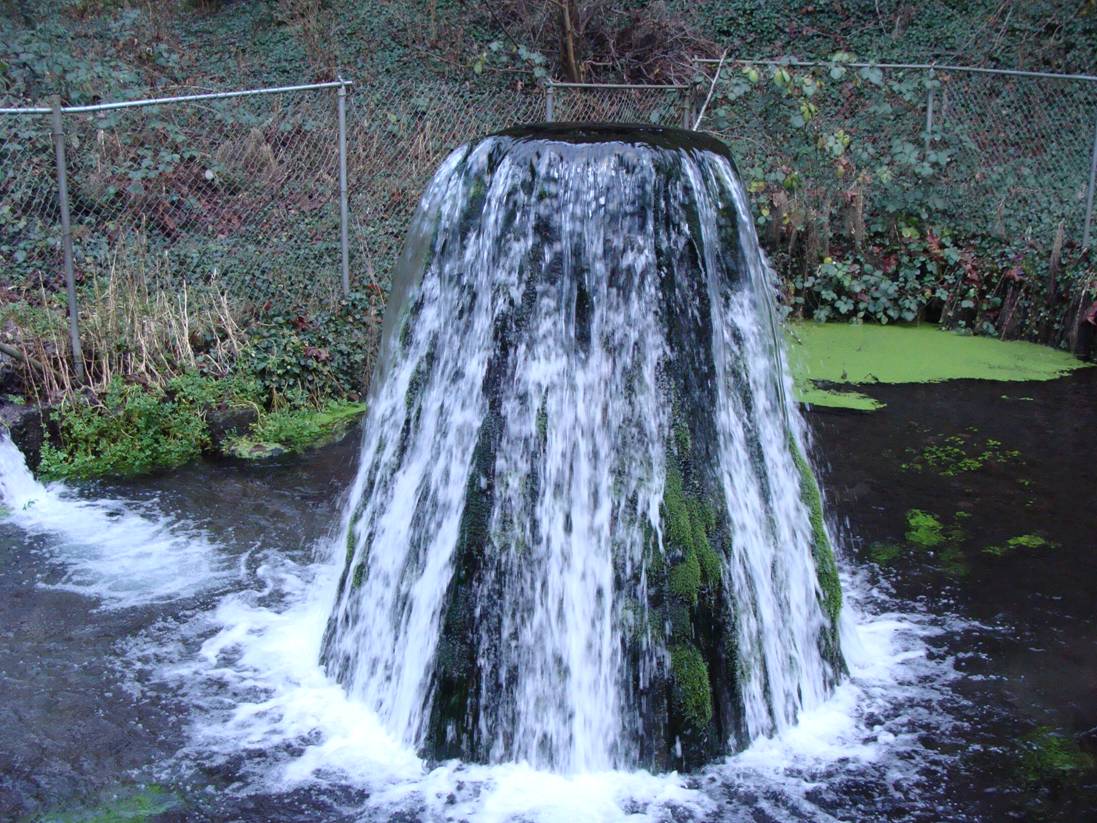
Suggest you take a look at the current groundwater discharge from the artesian well that provides the headwater flow for Garrison Springs Creek.
Don Russell
#####
From: Christina Manetti
Sent: Saturday, September 16, 2023 6:01 PM
Subject: Widespread aquifer depressurization after a century of intensive groundwater use in USA | Science Advances
https://www.science.org/doi/10.1126/sciadv.adh2992
#####
Kurt Reidinger
It’s not just a local problem, or even a national problem. It’s worldwide. And it just doesn’t affect humans – see link: Editorial: Threatened aquatic gems: freshwater springs and groundwater-dependent ecosystems
####
Thanks, Kurt for the good article.
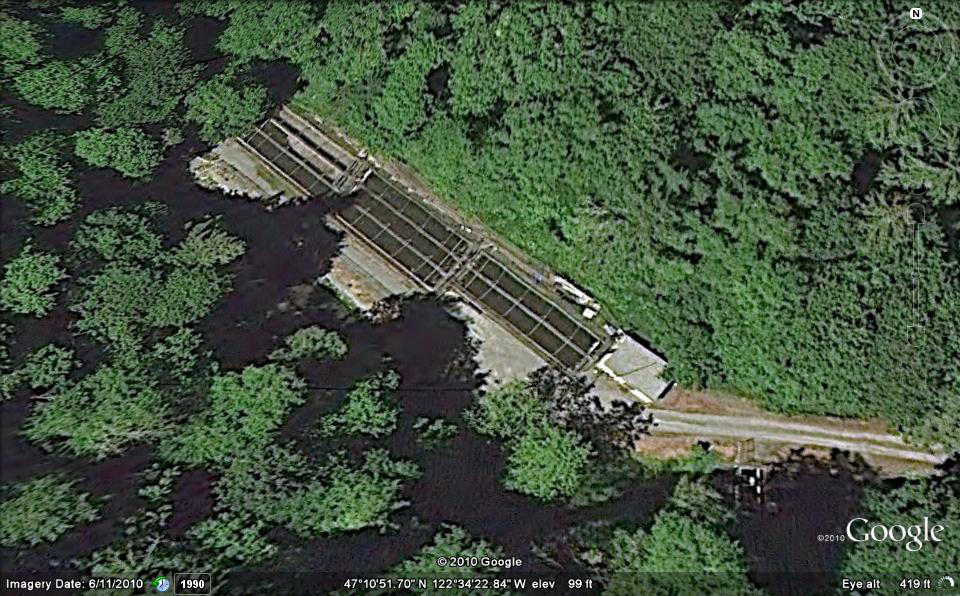
Don mentioned the artesian well which is the source of Garrison Springs.
WDFW depends on this well to rear its Chinook salmon. It the water goes so does the hatchery.
Al
####
My dear water lovers,
Yesterday, there was no flow in Clover Creek from the springs in Frederickson which is the source to the mouth of the creek at Steilacoom Lake, about 13 miles. I think our rainfall is 20-30% below normal.
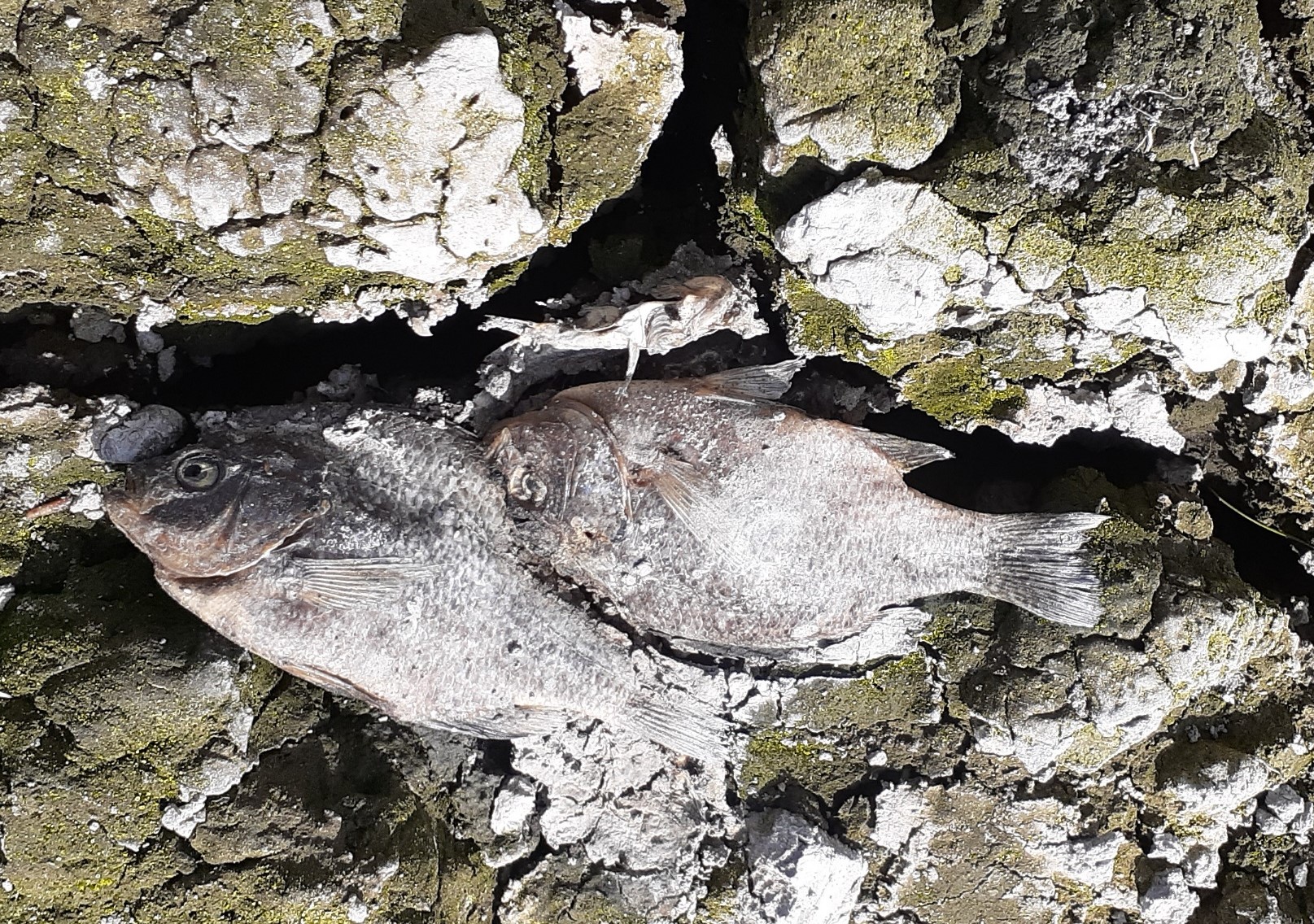
Except for areas where there is some standing water and maybe behind some beaver dams. all aquatic life has vanished. This condition is not likely to change for months until the heavy rains start.
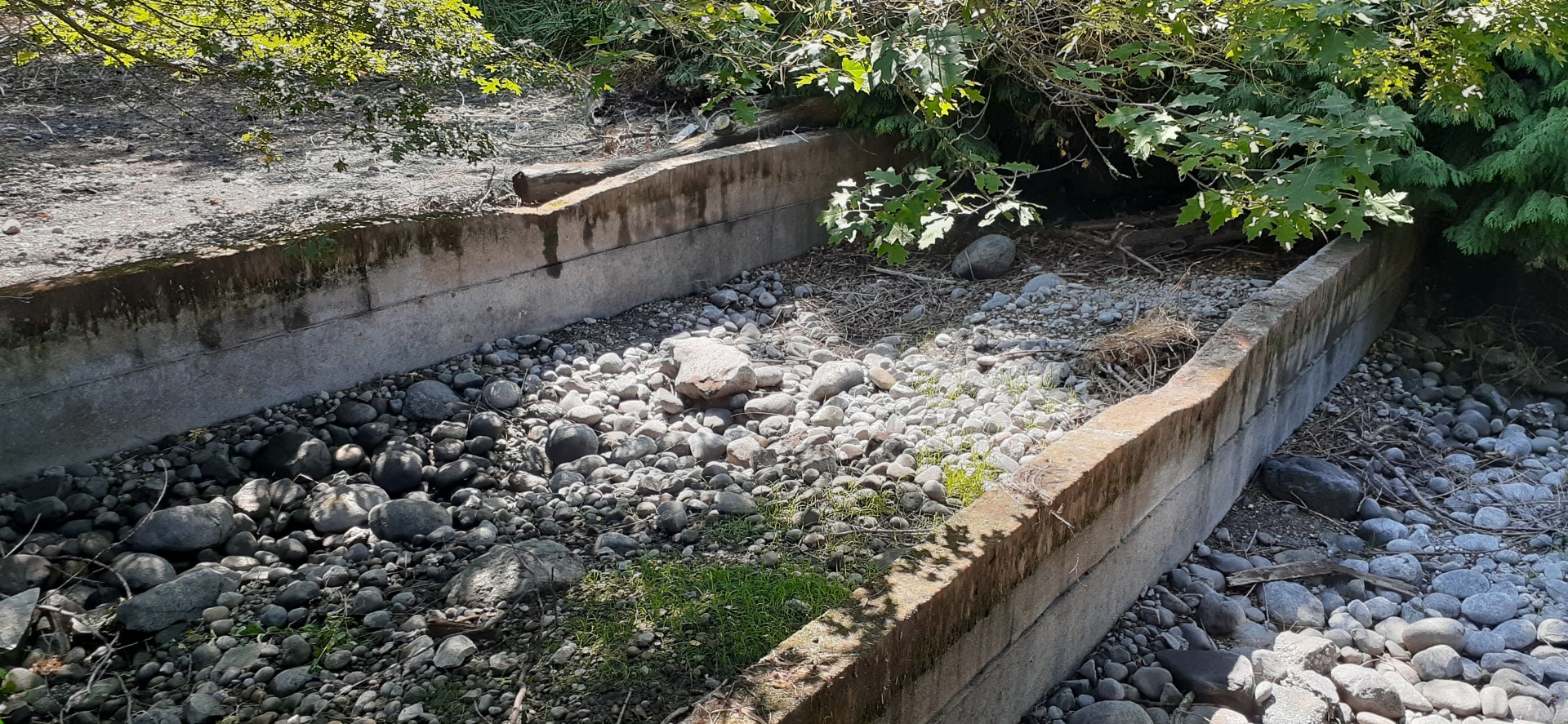
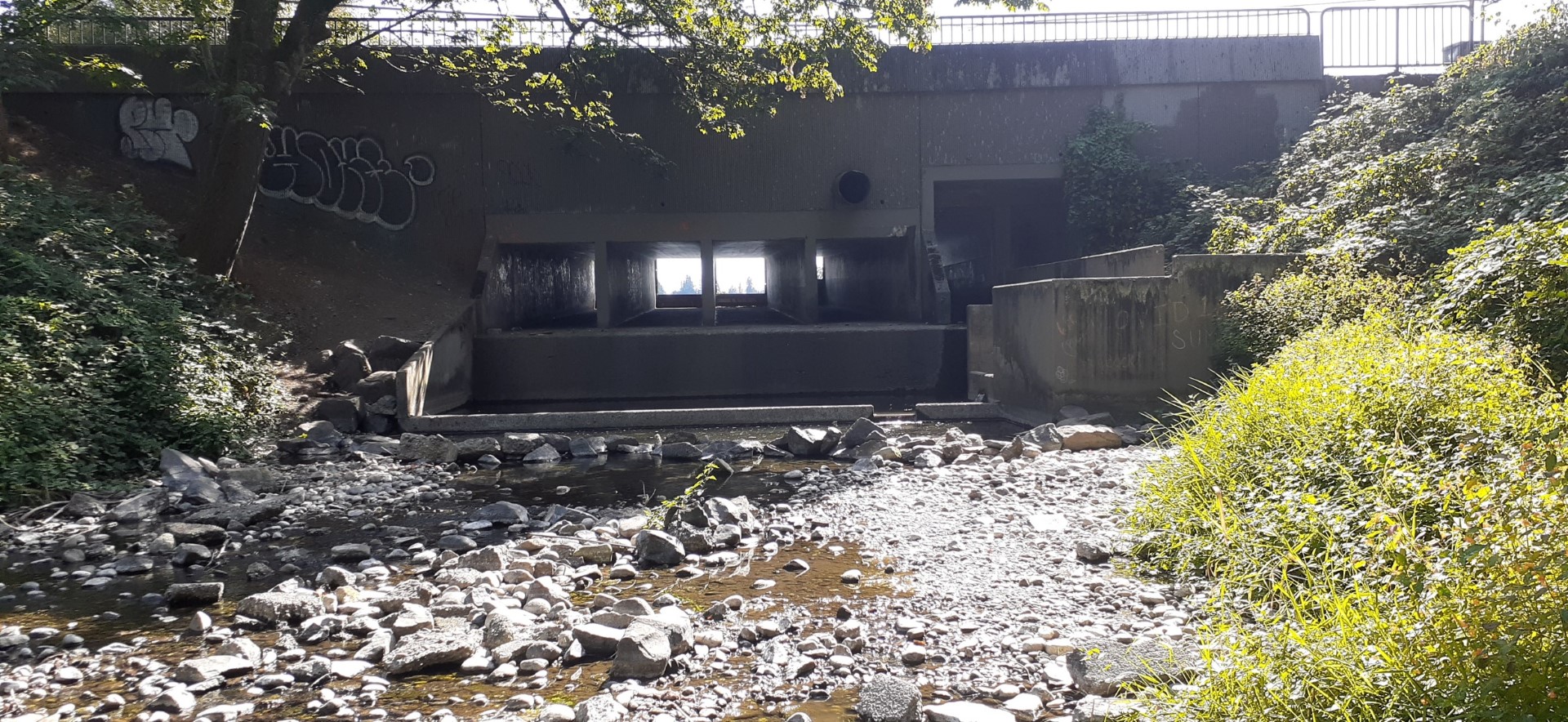
Photos show the situation: McChord and Morey Pond, tiny flow out of Spanaway Lake, dry springs at start of Clover Creek, dry stream in Lakewood at Gravelly Lake Dr. Of course, the fish ladders in Lakewood are dry.
We don’t know if water withdrawals from the watershed are also causing Clover Creek to dry up. In the summer withdrawals peak because of irrigations uses for yards and lawns.
Al, Water Steward,
Chambers-Clover Watershed




###
Al,
I’ve heard from several long time residents, myself included that irregardless of the rainfall, we have always had uninterrupted water flow in CC. Not until the late 90’s did we begin to see this issue. CC in the lower reaches from Soringbrook downstream experienced uninterrupted flow when LWD had to shut down two wells due to widespread PFAS contamination. We also had uninterrupted flow during the dewatering of the JBLM runway project. Beautiful, crystal clear year round flow.
The research I have done suggests that today’s wells are bigger and capable of pumping more volume at a high rate. It’s all about upply and demand. Ecology should have started monitoring ground water output back in the 90’s before Washington started rubber stamping building permits. We told them two years ago that the water shed was at a critical tipping point. People should be outraged at the lack of coordination between governing agencies.
FYI Randy is no longer with LWD.
Kim Underwood
 Pierce Prairie Post
Great article and replies. Thanks for the education. (from an L.A. transplant)