
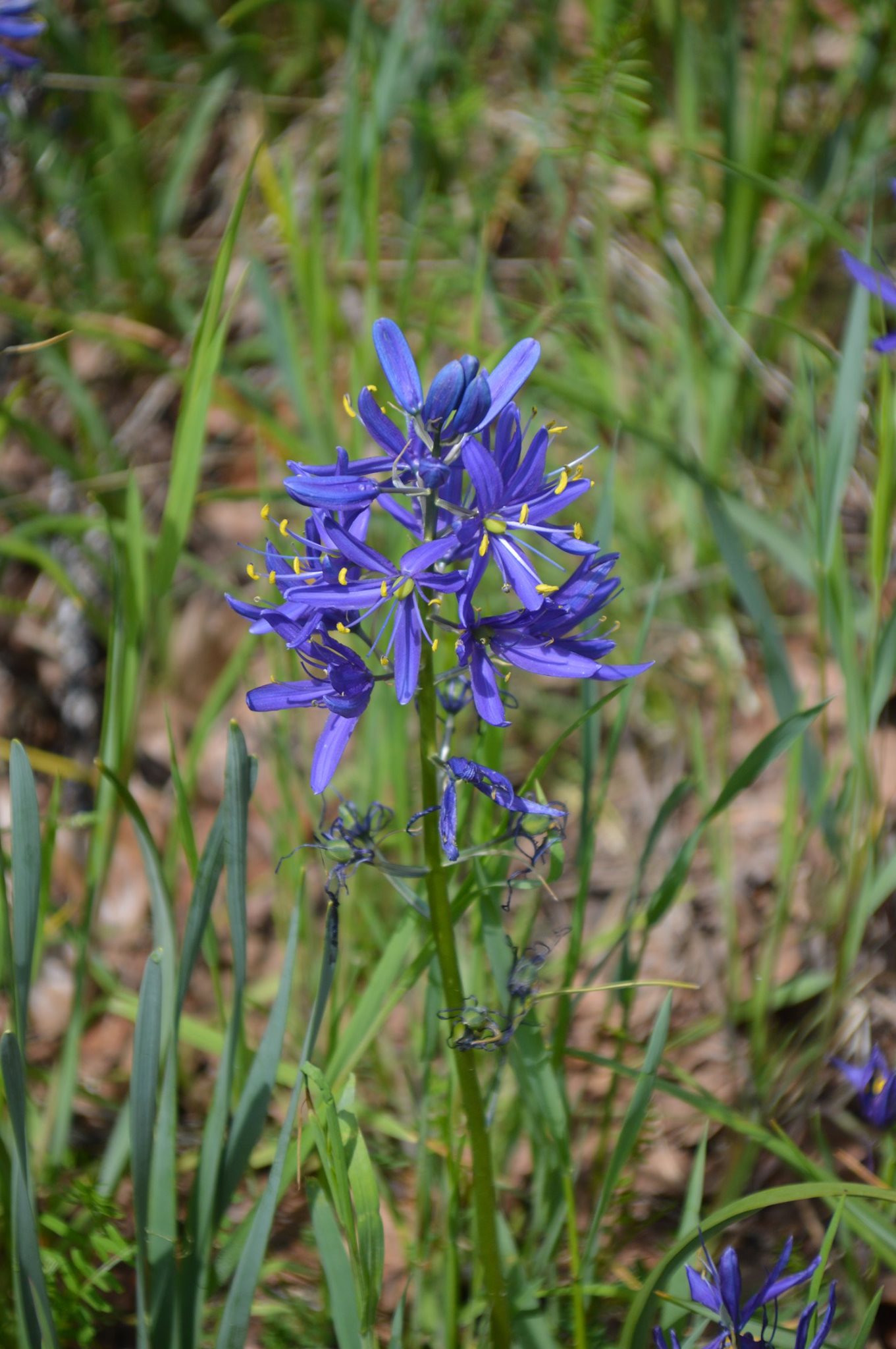
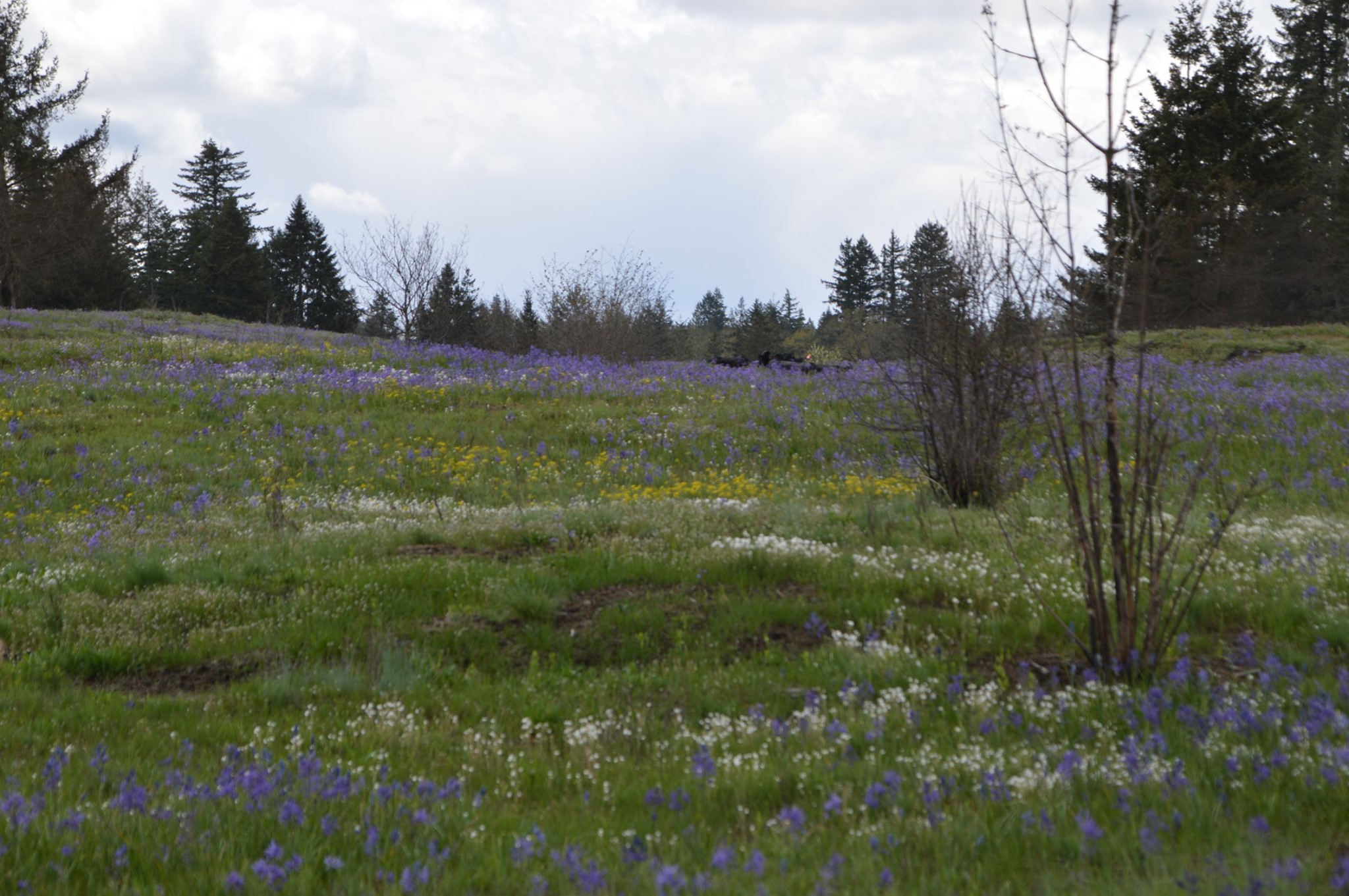
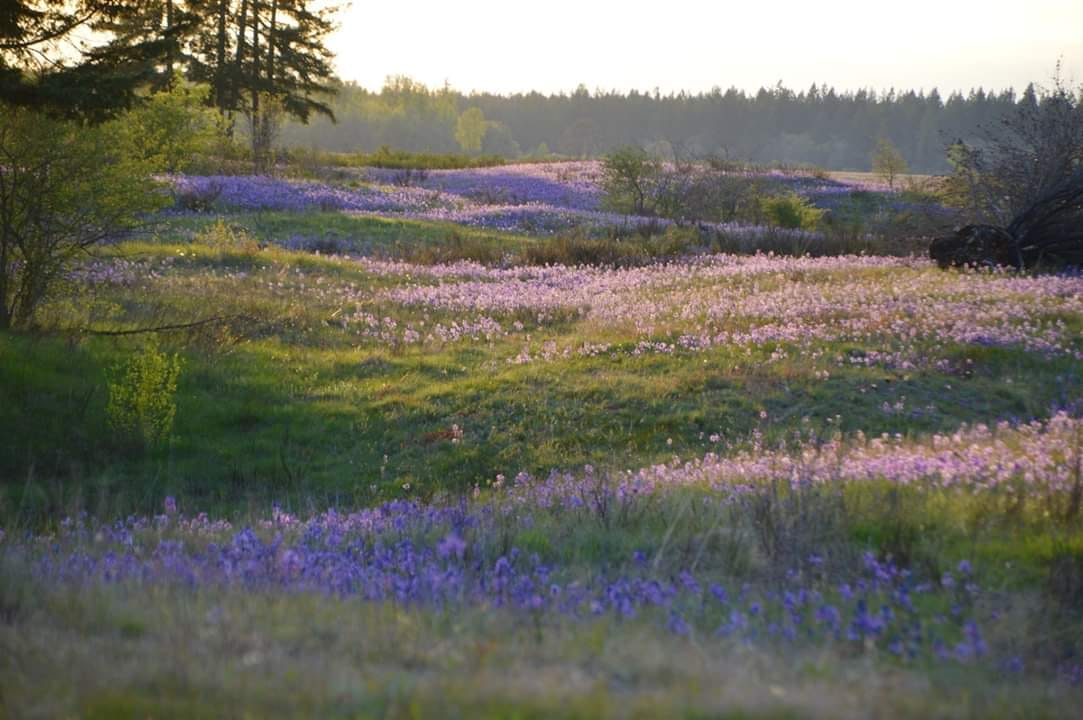
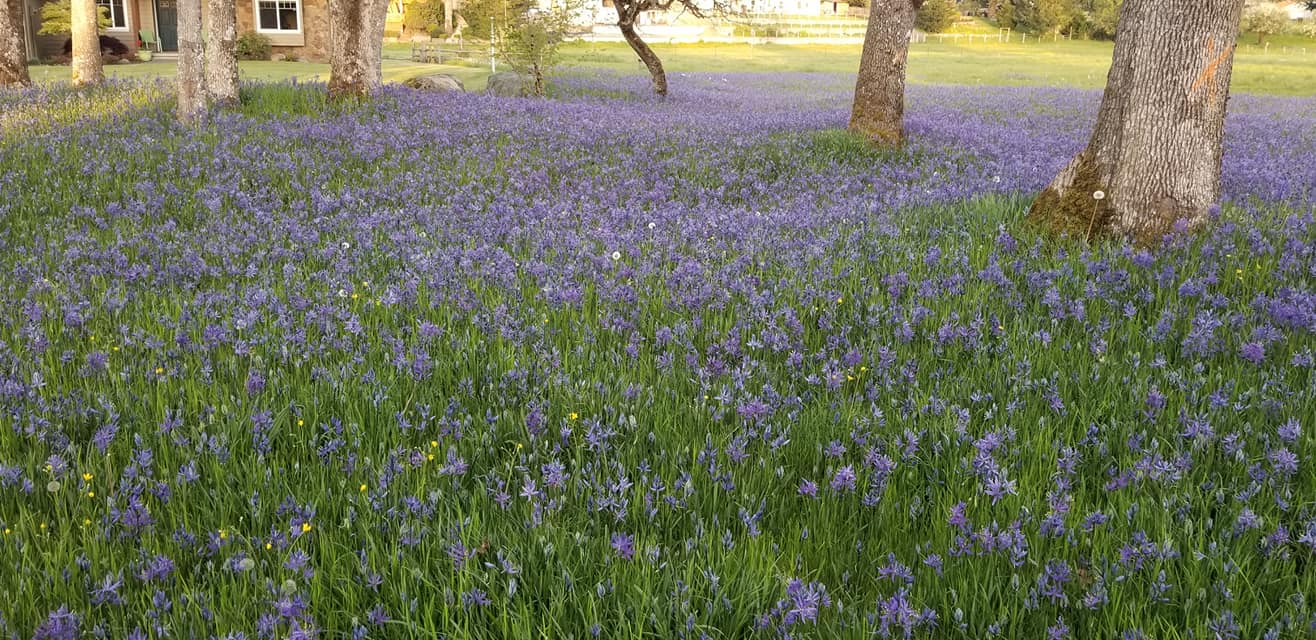
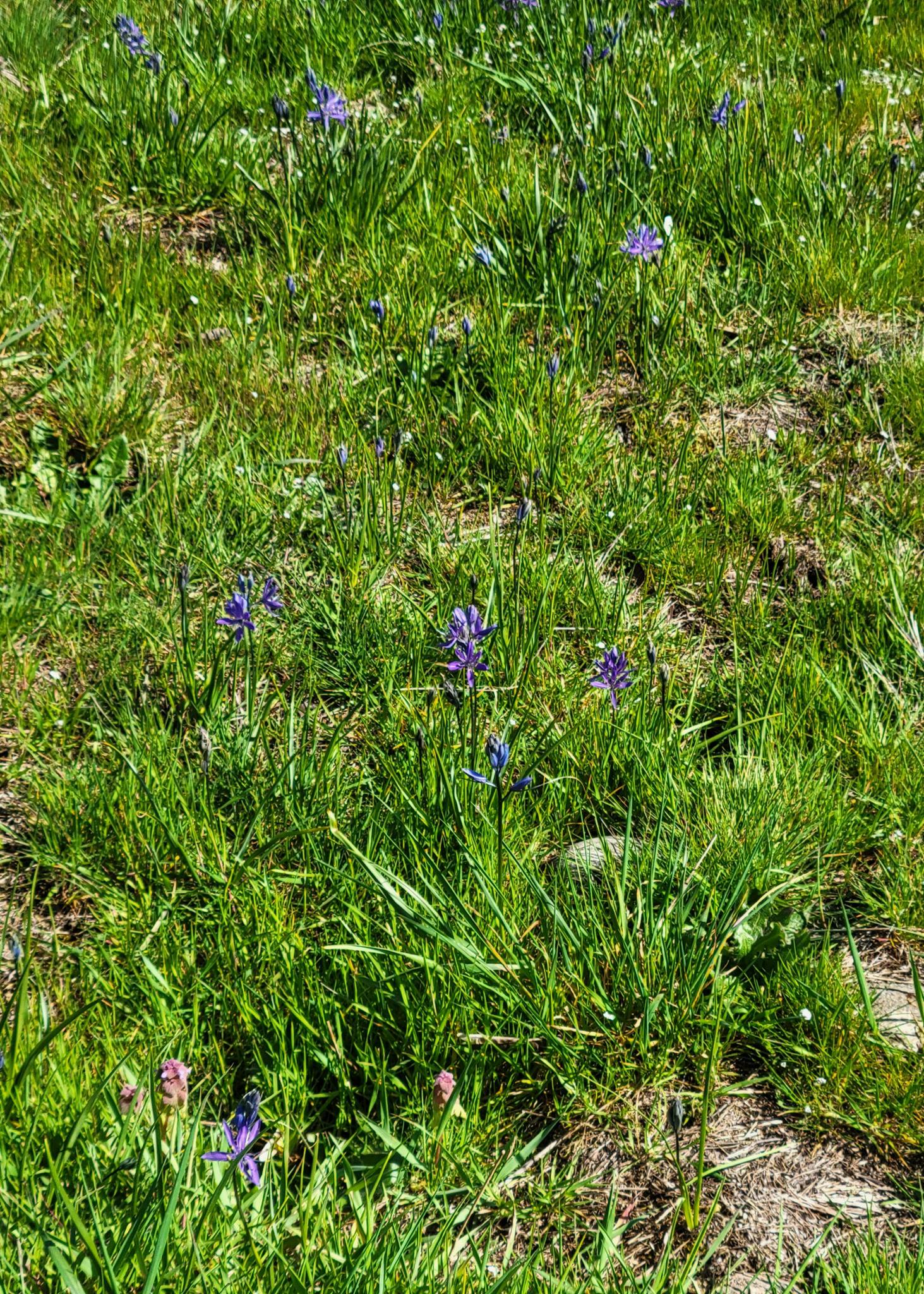
What’s camas? I am glad you asked, because it is not just any prairie flower. The prairie we live on is its home, but the bulb was a staple food for the local people of the tribes. Over meadows and sunlit prairies, the camas (kwetial, quamash, or wild hyacinth) thrive here in South Pierce County.
But there’s a trick. You might see them along a road in the ditch, but not coming up in your fresh mowed lawn. If you know them, don’t mow them. Go around a patch of camas, let it bloom and mow it when the blooms fade.
Here is a link to an article about planting and growing camas.
This is a quote from the Oregon History Project: “Historically, Native women cooked the camas bulbs in earthen pit ovens over the course of two days. This long preparation period was required to transform inulin (a starchy plant fiber), present in the raw camas, into fructose. The fructose in the cooked camas provided Indian peoples with a convenient sweetener for use in other foods. Camas cakes, produced from baked camas left to dry, were then stored for later use over the long winter months or used for trade with other regional groups.”
Scores of camas were kept by tribal people. There is a story of the Nex Perce and Chief Joseph and the Battle of Camas Meadows. In the area of southeast Washington, northeast Oregon and the Hells Canyon region of Idaho, the soldiers fought the Indians by finding and destroying their storage of camas. If you drive up Highway 3 from Joseph Oregon to Washington, you will see roadside historical markers regarding the battles from the Wallowa Valley to the Palouse.
The name Spanueh or “spáduwe” translated to “where [camas or fern] roots are plentiful.” The area called Sastuk (Parkland) was also well known for camas. The former golf course at PLU was an Indian camping area before settlers.
When settlers arrived, they brought many plants and favorite flowers with them. Invasive species like Scotch broom, ivy, and Himalayan blackberry started taking over the prairies where they were not turned over for crops. But if you look carefully over the next few weeks, you just might spot some camas. Even the logo for the Pierce Prairie Post has camas.
Where have you spotted the camas?

 Pierce Prairie Post