
The Pierce Prairie Post serves the unincorporated portion of Pierce County that includes Midland, Summit, Parkland, Spanaway, Frederickson, and Graham. Over and over, our area has had city managers and County officials explain to us that the tax structures for cities vary greatly from what a county has available. In other words, there are more monetary resources available to cities. It is not about raising taxes, it is about getting part of what is already out there.
Along with additional state tax revenues and utility taxes, a city has access to County, State and Federal grant money. That grant money is rarely mentioned in feasibility studies. It can easily account for more than 15% of a city budget. The recent feasibility report for South Hill Puyallup showed a 3% gap between available revenue and average needs for a community. Three percent is an easy adjustment when that extra grant money is figured in and a few tweaks to staffing levels are adjusted.
Consider the City of Roy, or the town of Edgewood. Neither has a very robust business district, yet they manage to adjust and move forward as cities. Likewise, with Pierce County spread so thin, the Parkland Spanaway area often feels like they are part of that “make adjustments and move forward” concept as well. To be certain, unincorporated county urban areas get the short end of the stick in resources and revenue invested.
The beauty of a city is how it can bring together the neighbors and the social advantages of getting to know each other. In areas of such high growth such as South Pierce County, there are so many people that are new to the area, no one seems to know anyone. Many do not even realize they are not living in a city, because their community has a name.
Many people in the unincorporated areas are on social media constantly trying to sort out what just happened here or there, who wrecked are car of had a tree fall on their house in a windstorm. In reality, we read about, but do not know each other. And, it really is who you know that helps you gain the trust to move projects forward.
Have you ever noticed the menu at the top of the page on the PPP? Next to Donate are several other menu items. One is ORGS. That one is a powerful tool. It tells you where groups in the community meet up so you can begin to know you neighbors and what is happening around you.
The PPP tried to get you out to events and fundraisers that help your neighbors and bring a sense of community. Get off your phone and try a few. Discover for yourself that there is a powerful group of people out there working for the greater good. Join in with them. Make yourself part of the strength of our community. Then decide if we have what it takes to take the reins and make our home, our community even better that it is.
Below if a press release from the Washington State Department of Commerce regarding grant money. This is an example of what a city can gain access to for their local area to increase the funds available to run their cities.
Public Works Board awards $5.1 million for infrastructure projects at April meeting
Grants and loans will help local governments address emergency failures, improve water and sewer infrastructure and plan ahead for future construction projects.
OLYMPIA, Wash. – The Washington State Public Works Board voted to award more than $5 million to eight projects during its April 3 board meeting. The awards will support jurisdictions in Clallam, Clark, Grays Harbor, Island, Jefferson, Pacific and Pend Oreille counties as they recover from unforeseen emergencies, protect water quality and provide reliable public works infrastructure.
The PWB awarded $3.4 million to three construction projects for improvements to roads, wastewater, stormwater and drinking water infrastructure. It awarded $503,000 for three projects in planning or design phases, and $1.2 million for two emergency projects for urgent repairs.
“Clark Regional Wastewater District continues to rely on PWB financing to deliver critical infrastructure while keeping costs manageable for residents and businesses. Access to low-interest PWB loans has saved district ratepayers an estimated $7 million in recent years,” said David Logan, finance director and treasurer at Clark Regional Wastewater District. “The district plans to invest more than $400 million in wastewater infrastructure over the next 20 years and without affordable state financing, there will be increased pressure on utility rates for families or projects will be delayed altogether.”
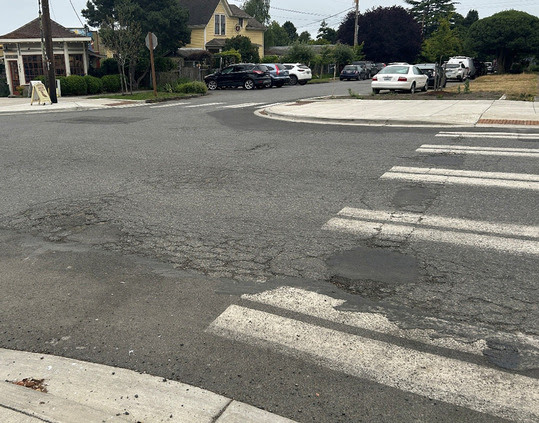
Port Townsend received more than $2.3 million to support constructing a new stormwater system on Lawrence Street, which includes full road resurfacing and installing ADA-compliant curb ramps.
Construction awards
Clark Regional Wastewater District (Clark County): $717,928 loan to complete a $10 million award for redirecting sewer from the Ridgefield Treatment Plant to the Salmon Creek Treatment Plant, which will reduce sewer discharges and environmental impacts to Lake River. The improvements will provide long-term sewer capacity, keep rates affordable and protect water quality.
Clinton Water District (Island County): $300,000 loan for replacement and relocation of the district’s water mains, which were first installed 50 years ago. Frequent system breaks from the aging and deteriorating infrastructure have led to multiple failures in recent years, disrupting the delivery of safe drinking water to the community. The improvements will prevent costly emergency repairs, water loss, service disruptions, and increased strain on district resources.
City of Port Townsend (Jefferson County): $1,173,772 loan and $1,173,772 grant for supporting construction of a new stormwater system along Lawrence Street, which will prevent stormwater inflow into the sanitary sewer and reduce the risk of sewage overflows. The improvements include full road resurfacing and installation of ADA-compliant curb ramps, which will improve equitable access in a key corridor. This investment builds from a 2024 PWB pre-construction award that completed planning and partial design for this construction project.
“Infrastructure is the gateway to our future,” said Logan, from Clark Regional Wastewater District. “The PWB program supports essential investments in wastewater infrastructure that enable housing, economic growth and environmental protection.”
Pre-construction awards
City of Forks (Clallam County): $100,000 loan and $100,000 grant for a wastewater facility plan that will help the city identify priorities for the wastewater system and update cost estimates of a new lagoon liner that will eventually replace the city’s failing aerated lagoon liner. PWB funds will help the city continue to diligently work towards a sustainable, efficient, and safe sanitary sewer system.
City of Newport (Pend Oreille): $30,000 loan and $30,000 grant for the design phase of improvements to the city’s wastewater treatment plant and its collection system. By enhancing the city’s wastewater treatment plant site and structures, long-term reliability and safety of the sanitary sewer system will be improved.
City of Long Beach (Pacific County): $121,500 loan and $121,500 grant for planning and engineering phases of installing and upgrading the sewer system along 25th Street Northeast. This project will support an area largely served by aging septic systems to convert to city sewer service, which will protect groundwater from contamination and allow for needed roadway improvements.
Emergency awards
City of Raymond (Pacific County): $150,000 loan and $150,000 grant for emergency repairs to a failed sewer main that handles sewer services for downtown Raymond and East Raymond. PWB funding to address the failed infrastructure will prevent sewage from reaching the Willapa River, and protect public health and safety, environmental health, tourism and the shellfish industry.
Grays Harbor County: $455,000 loan and $455,000 grant for emergency repairs to restore essential travel through Middle Satsop Road, which has remained closed since March after heavy rain and a landslide along the Satsop River. The closure poses an immediate threat to public safety, as emergency services including ambulances and fire trucks are forced to take a 16-mile detour, delaying life-saving service for up to an additional 25 minutes.
“PWB funding is a good choice for our community because of the availability of the emergency funding program and the speed in which PWB staff worked to help us apply,” said John Becker, Grays Harbor County engineer. “The availability of a low interest loan and grant will enable the funding of necessary repairs while not needing to tap into our reserves right away.”
The PWB pre-construction and emergency funding programs are open continuously until funds are exhausted. For the 2025-27 biennium, the PWB has $1,997,500 remaining for the pre-construction program and $3,672,425 remaining for the emergency program. The maximum award is $1 million per project for both funding programs.
The Washington State Public Works Board was created by the Legislature in 1985. Since its creation, the 13-member board has provided more than $3.8 billion to over 2,300 infrastructure projects across the state. The purpose of the board is to encourage self-reliance by local governments in meeting their public works needs and to assist in the financing of critical public works projects by making loans, grants, financing guarantees, and technical assistance available to local governments for these projects. For more information, visit our website.
 Pierce Prairie Post