
By Marianne Lincoln
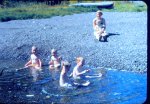
It was 1934. There was a 100 acre parcel on the Nisqually Reach, Hogum Bay available in a tax sale. Six educators from the Tacoma area pooled their money and bought the land. Eventually two, Morris E. Ford and Christian Miller would own the land. They had lots of family picnics and campouts there, squidging their toes in the sand and occasionally getting cut on a barnacle.
The road into the property was a grassy patch that barely fit a car and wound between tall fir trees. They parked their Model-T’s and packed in their supplies the rest of the half-mile to the beach, negotiating the steep and slick clay slope just before the beach. It was often covered in wet maple leaves and various huge tiger and banana slugs. Spider webs were commonly strung across the pathway as well. At the bottom of the hill, the slick, clay path gave way to sand and tall reed grass.
The beach had sand on the top closest to the hillside. That became small rocks, then larger rocks with barnacles, muscles and rockweed with its balloon-like yellow puffs. When the tide was low, more sand appeared, covered in large patches of green seaweed which hid small spider crabs, sole and salmon fry. Butter clams, cockles and oysters were dotted around the sandy bottom of the tidelands. On a low tide, you could walk out in water that was only knee high or less for half a mile into the Sound. Sometimes you would get squirted by the stream from a geoduck clam. Digging for them could take an hour of drilling down three feet into the sand. You had to know when the tide was changing, though, you didn’t want to get caught that far out when it came rushing back in.
Springs poured down from the sandy cliffs and pooled near the base. Those pools made great spots to keep watermelon cool for dinner. Plenty of tree branches fell from the cliffs to gather for firewood for the evening marshmallow and wiener roast. A guitar and some good old campfire songs as the stars came out made it a perfect day. Camping on the shore, however, was not on the list. The tides rushed in to the base of the cliffs on days when the tides were low in the afternoon. More than one eager beach sleeper found their bag soaked or floating before morning.
Such was the life on Hogum Bay. A short trip by boat would put you at the site of the Medicine Creek Treaty or the first site of Fort Nisqually. The lagoon was a place to find fresh water and picnic on the bounty of the sea for thousands of years and hundreds of generations.
In 1957, Christian Miller passed away suddenly. A few years later, his wife sold the property. To her frustration, the deal was to a shady timber company who stripped the most valuable trees from the property and never made a payment. She gathered the family together and they decided to take action to reposess the property. It was ugly from the slashing and hacking the timber robbers had left behind, but the beach was till the same. But soon she was diagnosed with cancer and passed away as well. Her son Edward took over management of the estate and sold most of the waterfront acreage. The sibling split the proceeds with Helen holding out for the balance of the land rather than much of the money. Some of the money paid for a lot at Beachcrest, so the family could access the beach by road and use the well maintained picnic facilities.
Helen and her husband camped on the balance of the property occasionally. They built a small log building with some of the plentiful little alder trees. They had a bulldozer come in and push a road through the new easement and topped it with some gravel. Later they dozed a pathway down to the lagoon. Unfortunately, rains that arrived soon after caused a portion of the road to wash down the hill and into the lagoon. The state Department of Ecology wrote a letter demanding they make repairs and precautionary stormwater runoff precautions to prevent further erosion.
They put a culvert to the south and dozed a road to the back end of the property away from the waterfront, also adding perk holes. They thought they might be able to subdivide the land and sell smaller parcels to make more money. A consultant was hired to look in to septic design. At about the same time, Weyerhaueser was applying to subdivide a large parcel further south on Meridian along the crest of the hill overlooking the Nisqually Valley. Thurston County took action and change the area zoning to 5 acres per lot. Helen’s plan to subdivide no longer would pencil out. Within a year or two, her husband, as pilot of a small plane, had a mid-air accident over Lacey and lost his life. Lawsuits were threatened and she had the first of many small strokes (TIA’s) to come.
By 1996, Helen’s children convinced her to move to a retirement home. To pay for this, her properties needed to be liquidated.
Having seen the previous waterfront property that was sold at Hogum Bay stripped of its shoreline trees for the sake of a view and the construction of huge, expensive houses, the siblings could not agree to sell the land through a regular real estate transaction. None of them wanted to see it developed like the other parcel. Daughter Marianne contacted the Nisqually Land Trust to see if they would take an interest. It wasn’t very far from the river and within the Nisqually tide flats area.
The Land Trust took the idea to their board, who agreed the site had significance as a lagoon. They didn’t have all the money necessary, but asked if the family would agree to take part of the money down, the balance as soon as it was available and the siblings would be given a life estate. The deal was struck. Helen’s living expenses did not require all the money at once anyway.
So around 1998, Helen Miller Scott’s property became part of the Nisqually Land Trust (NLT). Before anyone knew it, the alder trees and blackberry bushes began taking over the pathways though the property. In the past year, those blackberry bushes have been eradicated, native tree plantings have been added and the culverts removed.
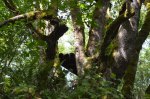
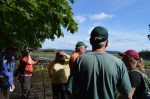
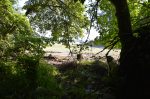
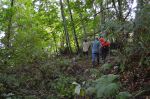
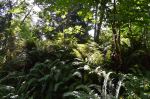
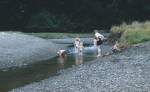
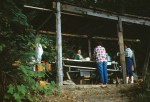
On August 30, NLT scheduled a walk through the property the photos are located on the Pierce Prairie Post’s Facebook page. Below is a gallery of a few of the highlights.











 Pierce Prairie Post
Great story