
Co-Authored by Kirk Kirkland & Al Schmauder. [Republished from the Suburban Times]
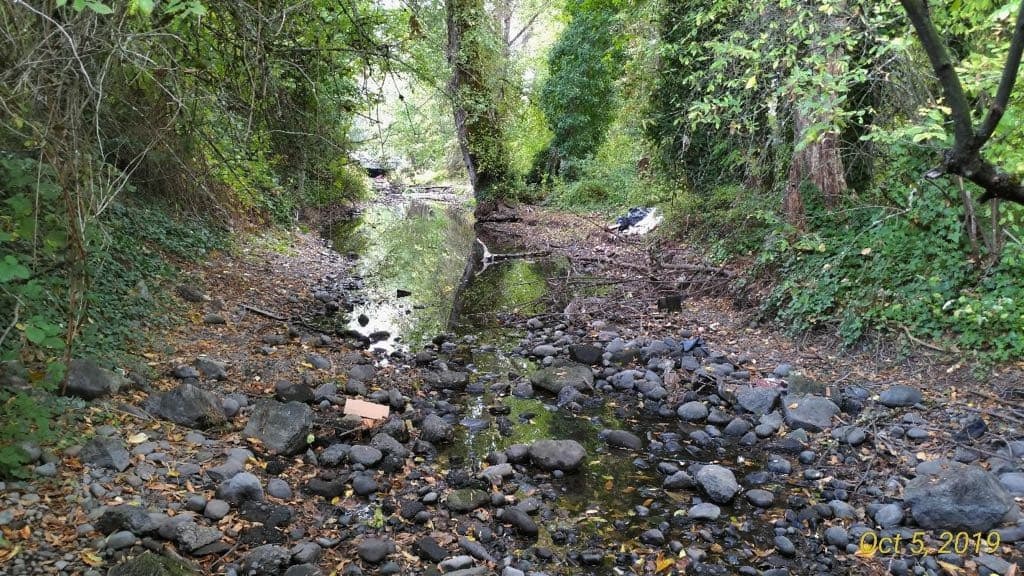
In the face of escalating urbanization in Pierce County, a concerning lack of oversight exists in monitoring drinking water usage and assessing evolving trends. The repercussions are evident, with increasing water pollution, diminishing well levels, and the cessation of winter flow in Clover Creek. Acknowledging these environmental challenges, Pierce County has taken a step towards resolution.
In November 2023, the Pierce County Council, recognizing the urgency of drinking water issues, enacted Ordinance No. 2023-65s2 as an integral component of the 2024-2025 budget. Notably, Section 21 of this ordinance mandates the Planning and Public Works Department to spearhead comprehensive initiatives:
- Conduct a business case analysis for the expansion of the Pierce County Water Utility.
- Consolidate smaller existing water systems for enhanced efficiency.
- Introduce reclaimed water services to foster sustainability.
- Propose strategies for developing a comprehensive countywide inventory of recognized water resources.
- Provide a 20-year projection of water availability and usage, accompanied by a detailed map.
- Submit a comprehensive report to the Council no later than June 1, 2024.
This proactive approach underscores Pierce County’s commitment to environmental stewardship and sustainable water management.
Background
Pierce County relies on wells operated by major water companies, small citizen-owned entities, and private wells, with recent commercial water extraction by two companies. The region primarily draws from a sole source aquifer, sustained by rainfall for drinking water and ecosystem support.
Post-consumption, a substantial portion is routed to the Pierce County sewer system, processed, and released into Puget Sound at Chambers Bay. The remainder is directed to septic systems or used for irrigation, contributing to groundwater recharge. The precise water volumes in the sewage system and septic systems remain undetermined, emphasizing the need for a comprehensive water management assessment.
The Research
In 1996, the Tacoma-Pierce County Health Department was tasked with implementing the Long-Term Groundwater Monitoring Program as described in the Pierce County Coordinated Water System Plan. The goal was to collect water level, production data, and water quality data regularly from representative wells (146) in four water basins and share the data with program participants.
The Findings
The 2005 report found several wells within the monitoring program appeared to show a declining water level. A following report in 2007 reported that 34 wells out of 113 monitored appeared to show a declining water level. In the Chambers-Clover Creek Watershed, 20 out of 48 wells showed some indication of declining water levels. This report also provided a map showing wells with elevated levels of nitrate, chloride, or arsenic. This monitoring and reporting program was terminated in 2007.
Groundwater-flow model
Members of the Planning Unit concluded that additional data, including the development of a numerical groundwater-flow model, would contribute to an improved understanding of water resources in the Chambers-Clover Creek Watershed. In May 2006, the U.S. Geological Survey began to develop a model simulating groundwater flow. The model could be used to assess the impacts of groundwater withdrawals on groundwater levels in addition to stream flows during low-flow conditions. The report was published in 2011 (Scientific Investigations Report 2011-5086).
The USGS has recently enhanced its model by incorporating data from 2014 and 2015, along with other modifications that aim to:
- Enhance the model’s applicability in simulating “local scale” water resource issues.
- Improve the accuracy of simulating stream flows and interactions between aquifers and streams.
- Reduce disparities between reported and simulated spring discharge.
These refinements and the outcomes derived from the CCCW numerical model will be detailed in an upcoming report set to be released in January 2024.
Recommendations
The Need to Restart our Ground & Drinking Water Monitoring Program
Discussions need to be held to determine the cost of funding the Tacoma-Pierce County Health Department to implement this program. The TPCHD is the appropriate entity to provide this independent analysis and reporting.
Recharge Drinking Water (groundwater) with Clean Water
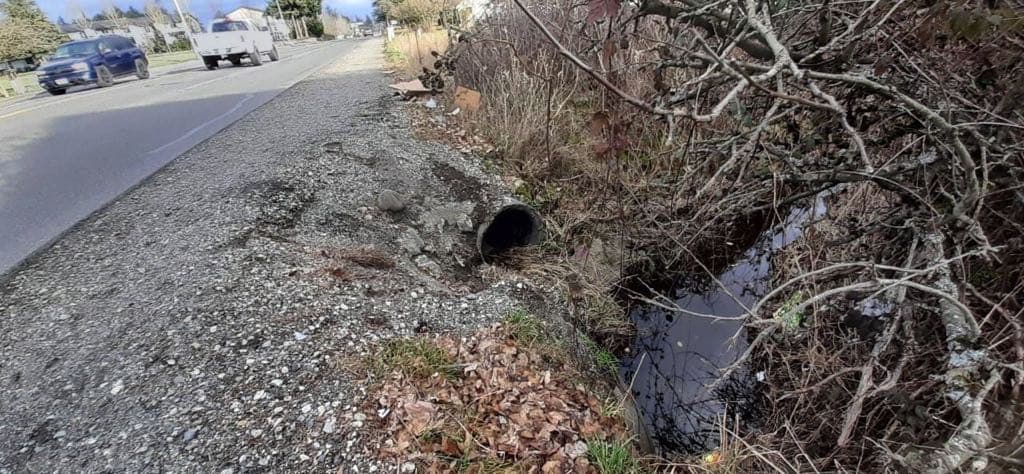
A higher priority needs to be assigned to cleaning rainwater that runs off high-traffic roads and parking lots. We now know that a chemical added to tires increases their life is deadly to Coho and Steelhead Salmon and is carried by rain off the roads directly to wetlands or streams. Aquatic critters may also die. County staff said an initial inventory found over 400 such drains.
Taxes
Property owners in the Chambers-Clover Creek Watershed contribute approximately $12 million through stormwater fees (around $150 per parcel). However, a mere 2% of this fund is allocated within the watershed to address water quality enhancement and flooding concerns.
The County stormwater staff employs a biased project selection method, prioritizing initiatives targeting flooding along the Puyallup River. Unfortunately, projects within the Chambers-Clover Creek Watershed aimed at cleaning contaminated surface water receive minimal funding priority.
Untapped Resources
Scientists anticipate our watershed receiving up to 50 inches of winter rain, with significantly less during the summers. The projected increase from the current 35 inches could add 15 inches to aquifer water levels. This scenario offers an opportunity to capture surplus winter rains and retain the water for groundwater recharge, benefiting our drinking water supply. County staff could identify County-owned properties along Clover Creek and assess the costs associated with implementing beneficial projects.
New Water Resources
Reuse of Water
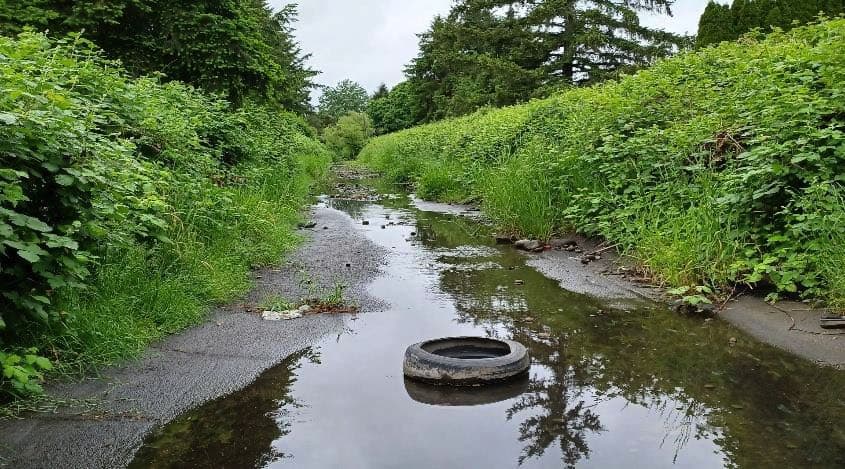
The Pierce County Sewer system removes water from the watershed 7 days a week 24 hours a day. This water is never returned to the watershed for reuse. Long-term plans need to be evaluated to build a “scalping” plant in the upper watershed perhaps near Frederickson.
Scalping plants intercept water from the sewer flow and treat it to a high level of purity. The water is available for reuse or return to the ground to replenish drinking water. LOTT in Lacey has operated a facility to create reusable water for several years.
Contaminates in our Drinking Water
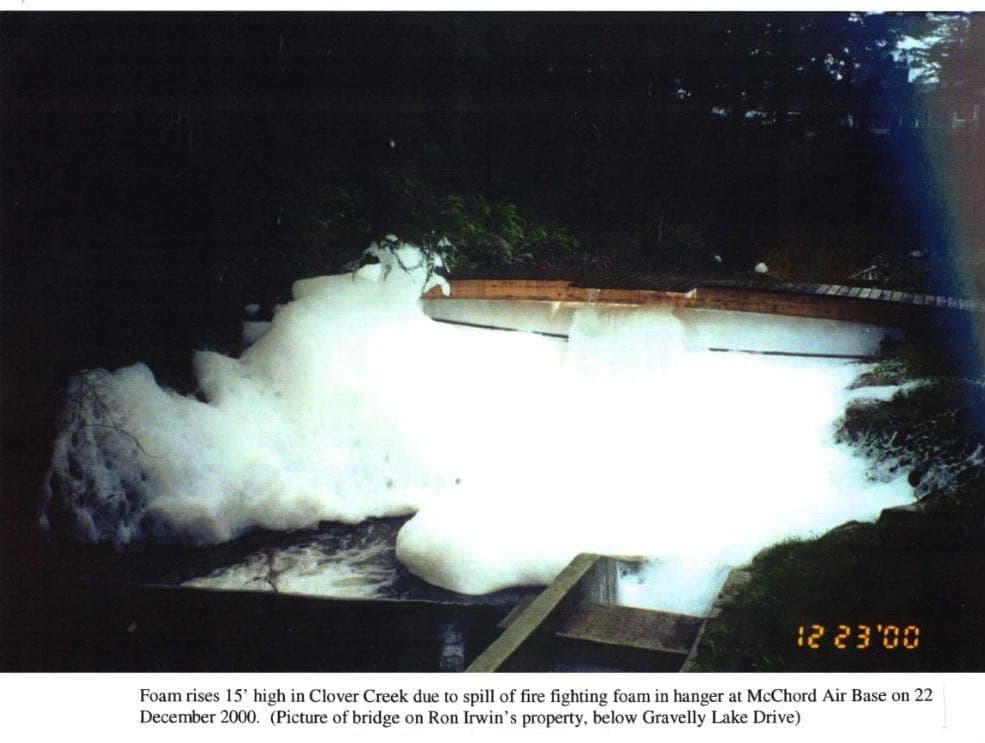
McChord Field used a firefighting foam for decades to practice extinguishing fires on aircraft. This chemical, commonly referred to as (PFAS) is considered dangerous to humans. In Dec. 2000, a pipe broke in a hangar at McChord Field, and gallons of this chemical flowed directly into Clover Creek. Evidence of the leak appeared in Lakewood as 15-foot-high foam accumulated at the fish ladders and the falls.
Migration of PFAS
In a recent e-mail, the manager of Lakewood Water District reported they have 12 wells contaminated with PFAS. Four wells were shut down and the water is requiring filtration, and three additional wells are being designed for filters. Unfortunately, shutting down a well leaves the PFAS chemical in our groundwater and it will continue to migrate into the lower storage areas (aquifers) to replace and contaminate clean water that is withdrawn.
Funding for Filtration
Lakewood Water District reported they have a suit against the Department of Defense for close to $400 million for damages and to pay the cost of future filtering. In a recent interview with council member Jani Hitchen, she said she visited a company in Tacoma that was researching methods to make PFAS safe.
The Spanaway Water District anticipates a shortfall of approximately 800-acre feet of drinking water by the year 2035.
Running Low on Drinking Water
At least four water companies in Parkland, Spanaway, and Frederickson are grappling with insufficient drinking water supplies to meet the escalating demands driven by population and business growth in Urban Growth Areas. Spanaway Water Company, in particular, is currently procuring water from the Lakewood Water District to address the shortage. With the issuance of more water approval letters to facilitate growth in Frederickson and Spanaway, it is imperative to examine watershed changes that will sustain groundwater levels, thereby bolstering the health of our lakes, creeks, and stream flows.
Meeting Demands
Transferring water from Lakewood to meet the demands of water companies upstream toward Frederickson is a practical solution. However, there is a concern that these water companies may become overly reliant on this additional water source. It raises the question of what would occur if Lakewood Water faced challenges in continuing to meet these demands, whether due to pollution or a water shortage. We posit that drinking water withdrawals by water companies are contributing to the decline in stream flow. This emphasizes the importance of sustainable water management practices and the need for contingency plans to address potential disruptions in the water supply chain.
Compounding the issue further, the sewer system is currently removing approximately 22,000-acre feet of water, and this figure is on the rise.
When winter rains resume, the replenishment process begins with replacing withdrawn groundwater. Only after this replenishment occurs can the rain contribute to supporting stream flow. It’s crucial to recognize that the magnitude of water extractions directly correlates with the amount of rainfall required to replenish utilized water, emphasizing once again, the delicate balance needed for sustainable water management.
New Legislation
Recent legislation introduces a new demand for drinking water by permitting two additional dwelling units on lots that meet the minimum lot requirement, in addition to the principal unit. This expansion is anticipated to surpass the available freshwater supply, raising concerns about the increased strain on water resources.

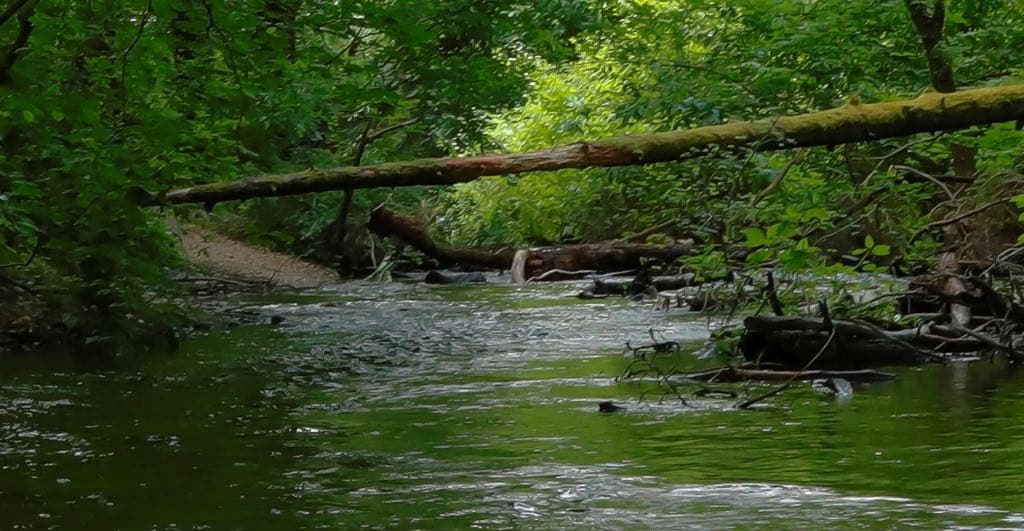
has not flowed in the winter for several years.
Why is this an interim report? Relevant data will soon be available from the revised U.S. Geologic Survey Model regarding groundwater flow in the Chambers-Clover Creek Watershed. The report requested by the County Council should also be prepared by 1 June 2024; to be included in our follow-up report.
This report was prepared using information from managers of water companies, personal observations, USGS gauge data, and discussions with County staff.
Special thanks to Jani Hitchen and Ryan Mello, County Council members, for drawing attention to an issue that affects every citizen in Pierce County – Drinking Water.
To read the complete report, click here to download a PDF copy.
About the Authors
Kirk Kirkland was the community coordinator for the Tahoma Audubon Society for 20 years, Al Schmauder is the President of the Clover Creek Council and past president of the Chamber Clover Creek Watershed Council; currently, he volunteers as the Water Steward for the Chambers-Clover Watershed. Learn more at the Environment Coalition website.
 Pierce Prairie Post
Thanks, Marianne, for the reposting. Al ________________________________
Thank you for spreading this information!! Coleen Cole