
by Kirk Kirkland and Claudia Finseth
Two neighborhood groups in unincorporated Pierce County have recently paid very high prices to attempt to protect their communities because the county is not doing it. Both were to try to stop two different kinds of large projects from dramatically changing their valued open space.
Both proposed projects were in clear violation of state environmental law, and one was in violation of Federal law. Those laws should have protected the community through county staff and elected official adherence to the Rule of Law.
BURLEY LAGOON
Out in Burley Lagoon, in an area designated as a state Shoreline of Significance, residents faced the plan of a large, industrial geoduck company to set up business on their beaches.
The Local Land Use Advisory Commission, which is the community’s governmental way to protect itself, agreed with the neighborhood group and asked for denial of the geoduck farm.
The LUAC was ignored by the planning staff.
So the community appealed to the Hearing Examiner.
But the county Hearing Examiner permitted the geoduck farm, which will become the largest geoduck farm yet in the county.
Burley Lagoon is a rich area of biodiversity, which includes Chinook Salmon runs and protected eelgrass beds. The county staff said the project had only minor to modest impacts to the environment.
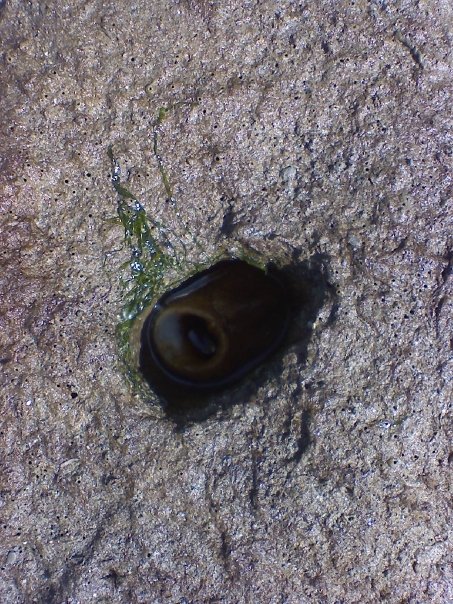

These are what county staff and the Hearing Examiner considered minor to modest impacts, and have permitted:
- grading of the beaches,
- embedding a foot of 4-6 inch PVC plastic tubes every 12-18 inches all over the beaches’ sensitive intertidal zone, with 3-4 inches of the plastic exposed,
- and harvesting with a water jet.
A net loss of shoreline functions and values is considered by county staff to be minor to modest impacts. But that’s not what the law says. The law clearly indicated there is no mitigation possible to make this large geoduck take over of the Burley Lagoon beaches possible. Restoration is required on this site.
But county staff, under pressure from the former county executive’s office, ignored the law.
The Burley Lagoon community appealed the permit to the County Hearing Examiner, presenting their case without an attorney as they had no funds to pay for an attorney. (Attorney costs for such hearings are astronomical, and most communities can’t afford them.)
The neighborhood group provided witnesses and cross examined the applicant and their witnesses. They hoped to build a record for appeal by presenting a total of 40 issues, of which any one or two could have led to denial of the permit.
But the Hearing Examiner ignored the law, and gave the geoduck farm a go-ahead.
Hard to believe that the HE would ignore a previous Federal Court decision that revoked 900 aquaculture permits on Puget Sound. But the Hearing Examiner also ignored the Federal Judge’s decision which called for a Conditional Use Analysis for all future permits in Puget Sound.
In preparation for an appearance before the Shoreline Board the community of Burley Lagoon began fundraising, asking advocates and neighbors to help with the cost of the appeal, for which they felt they would have to hire an attorney.
When asked about the cost of the appeal and his availability, their attorney he said: “Hearings are lengthy, complex, and expensive and can easily cost the petitioner $50K or more.” The community raised less than 10% of the cost.
In calling around to find an attorney to help with an appeal, one attorney explained: “I am very concerned that by helping you file a petition for review, I will be helping you get into a situation where you feel that you are ‘over your head’and, because I have limited time and, if you have limited funds, I won’t be able to help you much at that point.”
The Burley Lagoon community was able to find funding to file the appeal. Whether they will be able to raise the money to hire a lawyer is yet to be see.
It is a shame that environmental justice comes with such a high price to the average citizens who make up these neighborhoods and communities.
SPANAWAY MARSH
Out at Spanaway Marsh, developers want to build over 280 tiny homes on an area that was designated as a Biodiversity Management Area.
The original zoning of Residential Resource, which calls for low density, would have allowed for just a few homes on the 80 acres, and so protected it from such high-density use.
Spanaway Marsh was zoned Residential Resource because of the rich variety of wildlife that live at Spanaway Marsh—including bear, heron, porcupine, bats and many more— that are state-listed, with some species designated as endangered by the state Department of Fish and Wildlife (WDFW); also because of the importance of the Marsh for recharging the large aquifer under it that provides drinking water to the majority of community residents; and finally because the water originating at the Marsh feeds the creeks all the way to Chambers Bay and the Salish Sea, and is important habitat for salmon spawning.



To the residents of Spanaway and Parkland, the Spanaway Marsh complex, which includes Spanaway Lake, where the communities’ only public swimming area is located, is cherished open space.
The two large wetlands at the Spanaway Marsh take up most of the 80 acres. That leaves only 30 buildable acres on which to place the 280 tiny homes. That is very high density.
The county staff ignored environmental regulations, using instead an invented designation of “Executive Priority” issued from the County Executive’s office to override regulations and laws. This was a new way to ignore an area that had been designated a part of a significant area of biodiversity by scientists: the 1,400 acres of wetlands, creeks, wildlife habitat, biodiversity and forests in Spanaway and on Fort Lewis.
What is more, county staff did not require an Environmental Impact statement, as should have automatically been triggered.
So the communities of Spanaway and Parkland, led by a newly-formed Spanaway Concerned Citizens group, began the difficult process of raising enough money to hire an attorney to represent the area in an appeal to the Hearing Examiner in the next step.
County law protecting the wetlands and an eagles’ nest were ultimately ignored in the Hearing Examiner, too. He did not call for an Environmental Impact Statement either, which he also should have done. He let the project, more or less as it was, be permitted.
(This frankly begs the question of whether the Pierce County Hearing Examiner process is adhering to the Rule of Law and the Fairness Doctrine. It is of great concern presently in Spanaway and Parkland.)
Spanaway Concerned Citizens ended up raising and spending a whopping $150,000 on attorney’s fees for that one appeal. $150,000 dollars. Resident citizens reached deep into their pockets to raise this exorbitant amount at a time when their utilities bills and grocery costs were rising.
The high cost of the law suit could have been avoided if either the planning staff or the Hearing Examiner would have required an Environmental Impact Statement to evaluate the presence of wildlife on Spanaway Marsh. Such an EIS might have stopped the project as a similar EIS had stopped the Cross Base Highway from being build over these same two wetland 20 years earlier.
The people of Parkland and Spanaway now have to start all over to fund raise for their next appeal, in Thurston County Superior Court. This because the first two lines of what should have been protection under the law—county staff and the Hearing Examiner process—ignored the law.
Who knows what that cost will be?
Appeals are hard to raise money for over and over again. Citizens begin to lose hope. After the hearing examiner permitted the project on Spanaway Marsh, Spanaway Concerned Citizens put requests for donations on their website, held bake sales, waved signs on Spanaway Loop Road on weekends and offered tours of Spanaway Marsh from the public right-of-way of Wasmund Road.
Even with an appeal pending in Thurston County Court, which should have halted work on the tiny home project until that appeal could be heard in March, the developer began to make major changes to the Spanaway Marsh site.
Without a Fill and Gravel Permit, the developer made improvements to Wasmund Road, crucially working right in the water, filling in where two creeks flooded the road. They prepared the road for large trucks to deliver building materials to the building site.
After this, WDFW issued a Notice of Violation for damaging wetlands, streams and wildlife habitat. The agency required the developer repair damage, and not to apply for a Fill and Grade Permit until the damage was corrected.
Remarkably, a few days later county staff, disregarding WDFW and the law, granted the developer a Fill and Grade permit.
The developer then brought in an industrial-sized logging operation and cut down over 900 at-least 100 year old, mature trees in just two days, even though these trees and their protection was a significant part of the Superior Court appeal set for March 2025.
Spanaway Concerned Citizens asked for a Stop Work Order. County staff refused. So SCC filed an appeal of the Fill And Grade Permit, which cost another $1,700.
A NEW COUNTY GOVERNMENT IS AN OPPORTUNITY
Fortunately, after the November 2024 election, we have a new County Council and Executive. We need to make it clear to them that we already pay our taxes to fund our government: in return we expect our government to protect our neighborhoods and communities through the full measure of the law.
When the county does not adhere to the law and its enforcement, then the burden is thrust back on average citizens of these communities and neighborhoods to try to see that the law is carried out through the judicial system.
That ordinary citizens are having to pay tens and even hundreds of thousand of dollars just to see the county obeys its own laws is a sign that our county government is not working properly.
Something is very wrong with both the Pierce County Planning Department and the Hearing Examiner process.
These are the very things that we can communicate now to our newly elected officials to help get them up to speed on our local issues. We can let them know what it is costing communities just to see the law is enforced. We can let them know we would appreciate a renewed emphasis on the Rule of Law, so that caring for our part of the county doesn’t have to become an undue financial burden on us and our neighbors.
At the same time, we can help to keep our county council members informed of what is happening in our communities that they should know about. You can email them directly through their contact form on the PC county council website, or at pccouncil@piercecountywa.gov.
 Pierce Prairie Post
Brave, smart work. I applaud your efforts, knowing how soul-crushing the blatant corruption is. Thank you! Most communities lack heroes. Spanaway is most fortunate to have you and your cadre of brilliant fighters.