
By Marianne Lincoln
Elk Plain and Spanaway have older settler history than almost any community in Western Washington because they were locations of Fort Nisqually farming stations.
The Puget Sound Agricultural Company (PSAC) was created to continue British presence and the Hudson Bay Company’s profit in the Pacific Northwest. The historic map made for the court case between HBC and Pierce County shows most of them except for Moloch House. (aka Moloch Farm)
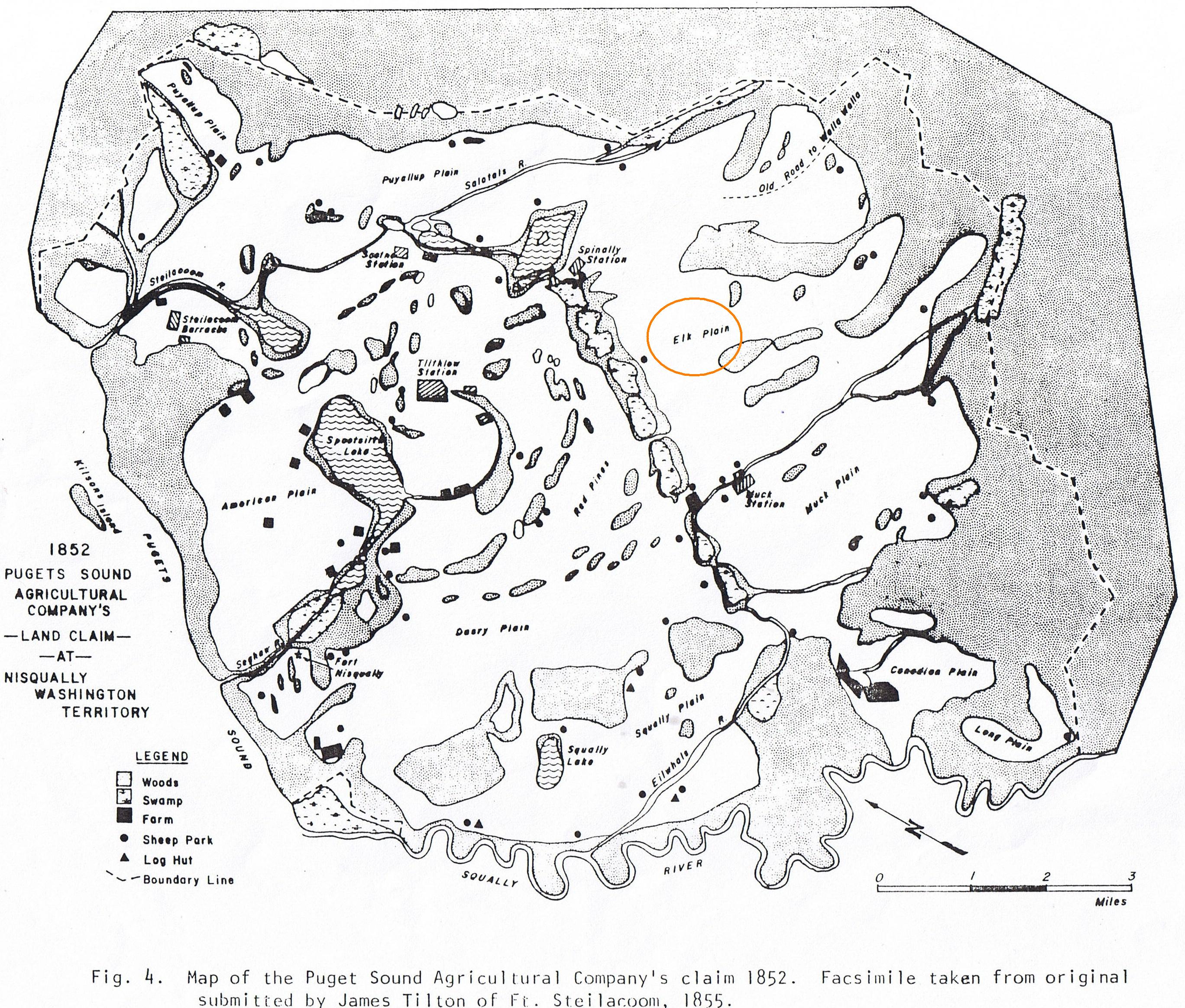
Sastuc (Parkland), Spanueh (Spanaway), T’lithlow (Lakewood/Ft. Lewis), S’Gukugwas (west of Roy), and Moloch House (Elk Plain) are the prominent locations of these farms. But Moloch House, although spoken of, is not on the map.
Having grown up in Elk Plain, aka Loveland (the railroad whistle stop name), I started surveying the landscape for a likely location. Landmarks for PSAC farming stations usually included a large stand of Garry Oak trees, some ponds or a creek, and flat, open prairie. Ground signs there also included periwinkle (aka vinca) and manroot (wild cucumber/marah).
It was handy that in 2012, when I was looking, I was living in Elk Plain. In fact, that is when I decided I should start the Pierce Prairie Post. These stories needed to be told before development took over all the landmarks.
I decided on two possible locations, the first was near Centennial Elementary along Mathias-Webster Road. This was along the old route from Elk Plain to Kapowsin.
The other was a bit more hidden and developed, east of the old County Elk Plain Road Shop along 232nd where there was a very old looking farm and barns with the ground sign and some suspicious ground markings from aerial photos. The ponds and oaks trees were just along the ridge on the south edge.
Even the bar now called The Hideaway before remodeling was a very old building that looked like it may have gone back to the very early 1900’s. There was a drinking establishment wherein his older years, pioneer John McLeod was hit over the head with a rock and robbed, told in history books.
Skipping ahead from 2012 to last Thursday, a Nisqually contract researcher, Karen Capuder, was riffling through records and posting some interesting excerpts of letters about historic figures coming and going from the area on her Facebook page.
“During the 1850s, Grieg worked at Fort Nisqually, Tlithlow Station, New Muck, Spanaway, Sastuc, Moloch Farm, and, finally, in 1859, was moved to manage the PSAC’s operations at S’Gukugwas, after the murders of Quiemuth and Leschi and the expropriation of both the location, and the name, of Quiemuth’s longhouse, S’guk-e-kwus.”
I commented about how I had been looking for Moloch House. She returned with this:
“Moloch House was an outlying farm that was situated in the eastern portion of the PSAC landholdings, on Elk Plam (Table 2) Kennedy et al (1983 5-12) suggest that Moloch House was within the boundaries of contemporary Fort Lewis. However, Dickey (ca 1918) notes that Moloch House does not appear on any of the early PSAC maps and that a precise location cannot be determined for this PSAC station. Moloch House initially was a private land claim owned by George Barr (Dickey ca 1991. The station included a house, a barn, 150 acres of fenced land, and 15 acres of arable land (Dickey ca 1991)
Other than it was located on the Elk Plain, little is known of its exact location. The farm was purchased from George Barr, a discharged soldier, in 1855. Barr is then employed by the Company as a herder. Moloch House was a fairly substantial establishment, with 150 acres fenced. The 1857 inventory lists a house and barn and 15 acres of arable land. There are later references in the Muck Journal to there being a house, a herder’s house, a barn, a stable, and a storehouse located there. In the 1859 tax list, the acreage fenced has been increased to 150 acres. The harvest in 1857 was 300 bushel oats, 75 bushel peas and 50 bushel potatoes. The station was located next to a claim owned by a man named Morrison whose improvements were purchased by Huggins [Muck Journal, July 22,1858]. Public Lands Survey Maps of this area show a number of’ farms in the ‘Elk Plain area.’ These maps were made in the early 1870s after the Company had sold its holdings to the U.S. Government so one of these should be Moloch. Huggins writing in the 1870s states that he is gone to “Grant’s (Elk Plain)” for a funeral. That he means that Grant’s is the old Elk Plain Station or just that Grant’s is on the Elk Plain cannot be determined. There is one other good piece of evidence however for Grant’s being Moloch House. There is a road shown on the GLO maps running from Muck Station, along Muck Creek to Murray’s and then straight across country to Grant’s where it ends. This seems to be the only one of the Elk Plain farms that is connected directly to the Company headquarters at Muck Station.”
Years ago, I stood in the Northwest Room at the Tacoma Main Library and took photos of old plat maps of Pierce County. I keep them on my computer with other historical photos. I pulled them up and started looking at the 1870 maps of Elk Plain for a land holding name of Grant. And, there it was!
Not only was it there, the right size in acreage, but it was also located at one of the sites I suspected, right between 224th Street and 232nd Street, adjacent to the old County Road Shop.
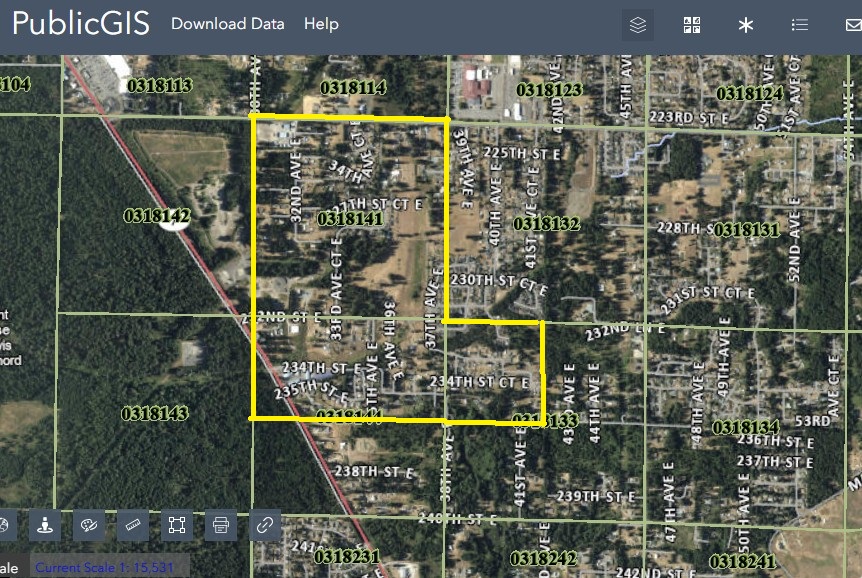
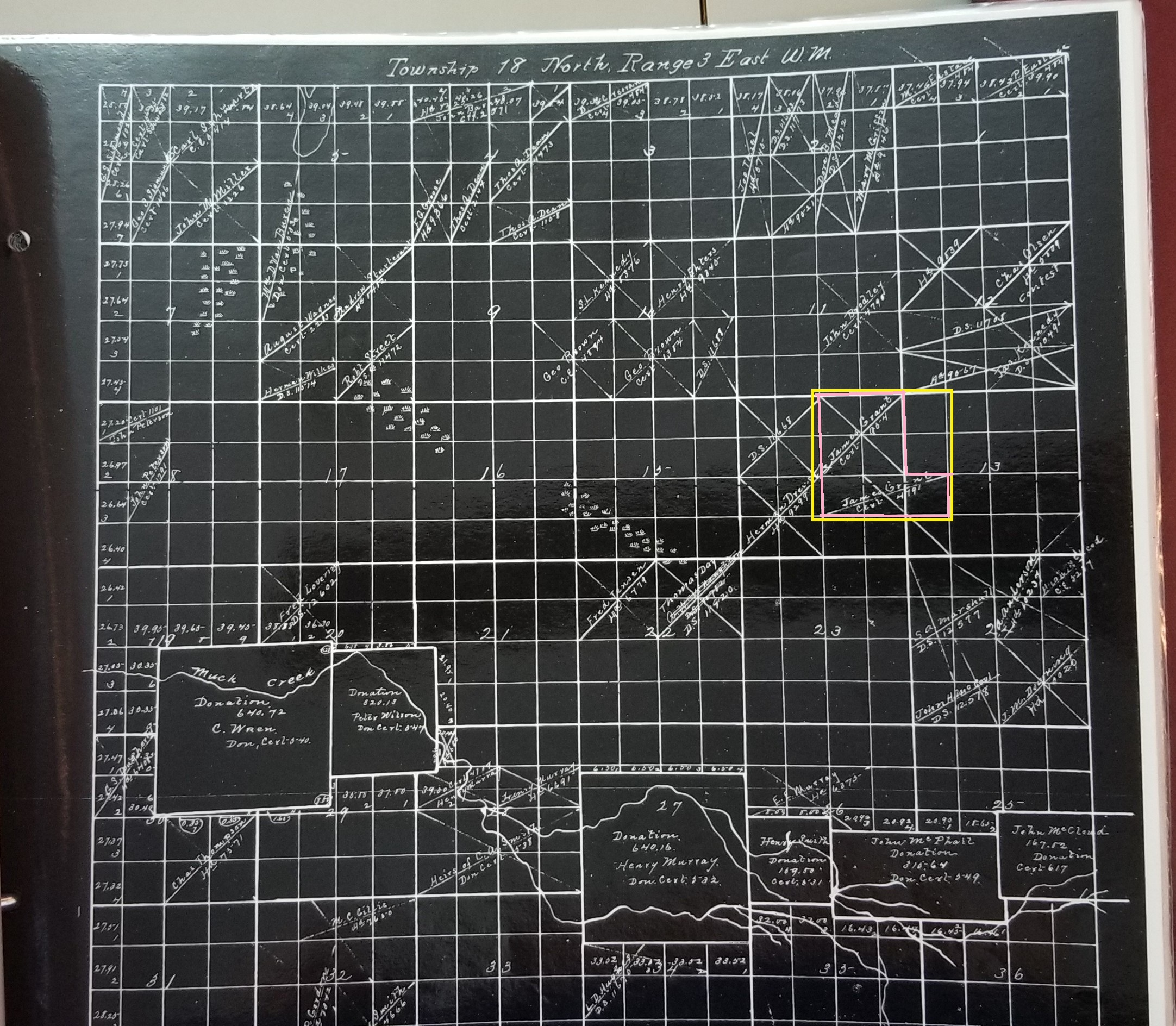
And best of all, this ended the mystery of the name, Muck Kapowsin Road, what 224th used to be called. As I sat in Mr. DeHart’s Washington State History class in 1973, and pondered where Muck was, and why the road ran to Thrift, not Kapowsin. That road used to run directly from Muck Farm to Moloch Farm in Elk Plain. Since Fort Lewis was created in 1915, the old farms from the prairie area were demolished and the road overgrew with trees.
A similar road, Higgins Grieg, runs from Roy, past the Rodeo ground out to where S’Gukugwas was sited. Tribal members and friends on the Leschi-Quiemuth Honor Walk are taken to S’Gukugwas each year. I have no idea who Higgins was, I suspect that was Huggins Greig Road. Those mistakes in spelling were often made.
Another well-known road from SR507 into Fort Lewis/JBLM, known as East Gate Road, used to bear the name Huggins Road and ran from Fort Nisqually to Muck Station. The road from Murray’s to Elk Plain and Moloch House appears to follow what is now the gas pipeline route. 224th, Muck Kaposin went to Kapowsin at about 46th Avenue to Mathias Webster Road. It reaches Meridian at Camp Arnold and a place that was called Glennis.
The Chehalis Western Railroad that ran from Salcich Junction (Frederickson) to Loveland travelled on to Greendale which is also no longer there because the residents were removed and the land was given to Fort Lewis between 1915 and 1942.
Near Perimeter Road and on what would have been the Cross Base Highway, Weiler Road (176th St.) ran from Whittier School at the top of the hill, on to Hillhurst. Hillhurst is now an ammunition storage area on JBLM.
For all of you who are new to the area, you can see there have been many changes and there are many stories.
In the future, I should tell about Sam Moe who donated the land for the Elk Plain School. The Ladwigs who rant the local grocery and hardware next to the Loveland whistle stop. Their farm became Bethel High School after their son passed away and his wife lost the farm in a tax sale. The Castle’s bought it and sold a section to the new school district. Del and Laura Beattie had a home on 240th Street (still there). LauraDel is the name of the development next to the Go Cart Track on the Mountain highway.
The Ockfens farm was across 38th Avenue from the High School and the Eagle Garage on the Mountain Highway which is now the daycare by the RR tracks. Many Ockfen’s worked for the School District, but they were also on the 1853 Longmire Wagon Train, the first to cross the Cascades over the Naches Pass. The Wrights, whose farm was directly north of Bethel High, were also on the wagon train. Benjamin also owned property at what is now Military and Pacific Avenue.
Years ago I wrote about the Elk Plain Cafe, owned by the Tibbitts. The Dairy on 208th was theirs for some time, the one with the view and preserve with warehouses across the street.
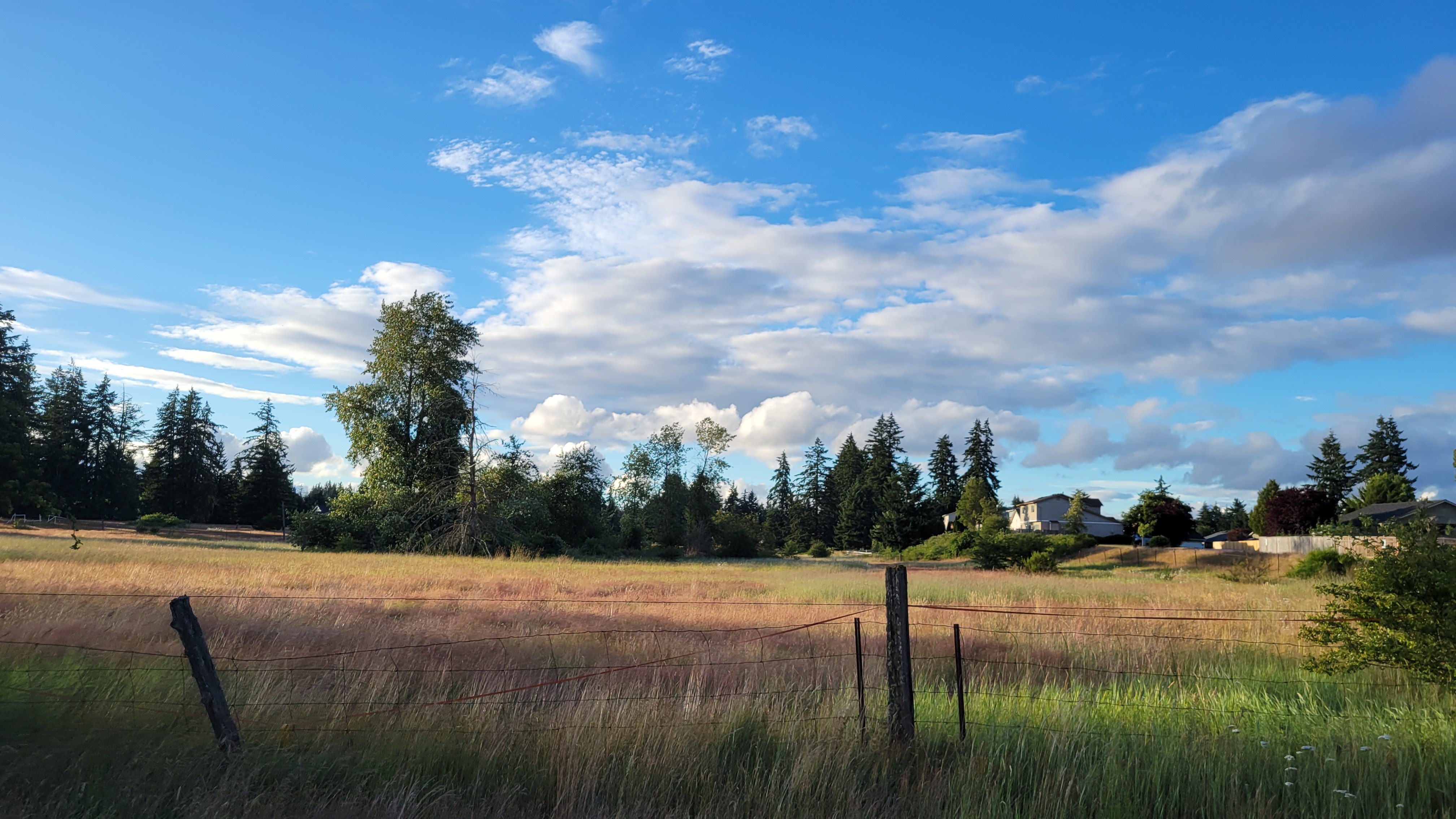
Elk Plain is old. It has many ghosts, ones with amazing stories. No worries, they are friendly, but they are looking for their stories to be told. Frist, we have a landmark that is overdue for preservation, now that we know where it is. Imagine that, it was kitty corner to Bethel High School where I used to daydream about where Muck might be. I think some old ghost must have been whispering in my ear… go find me.
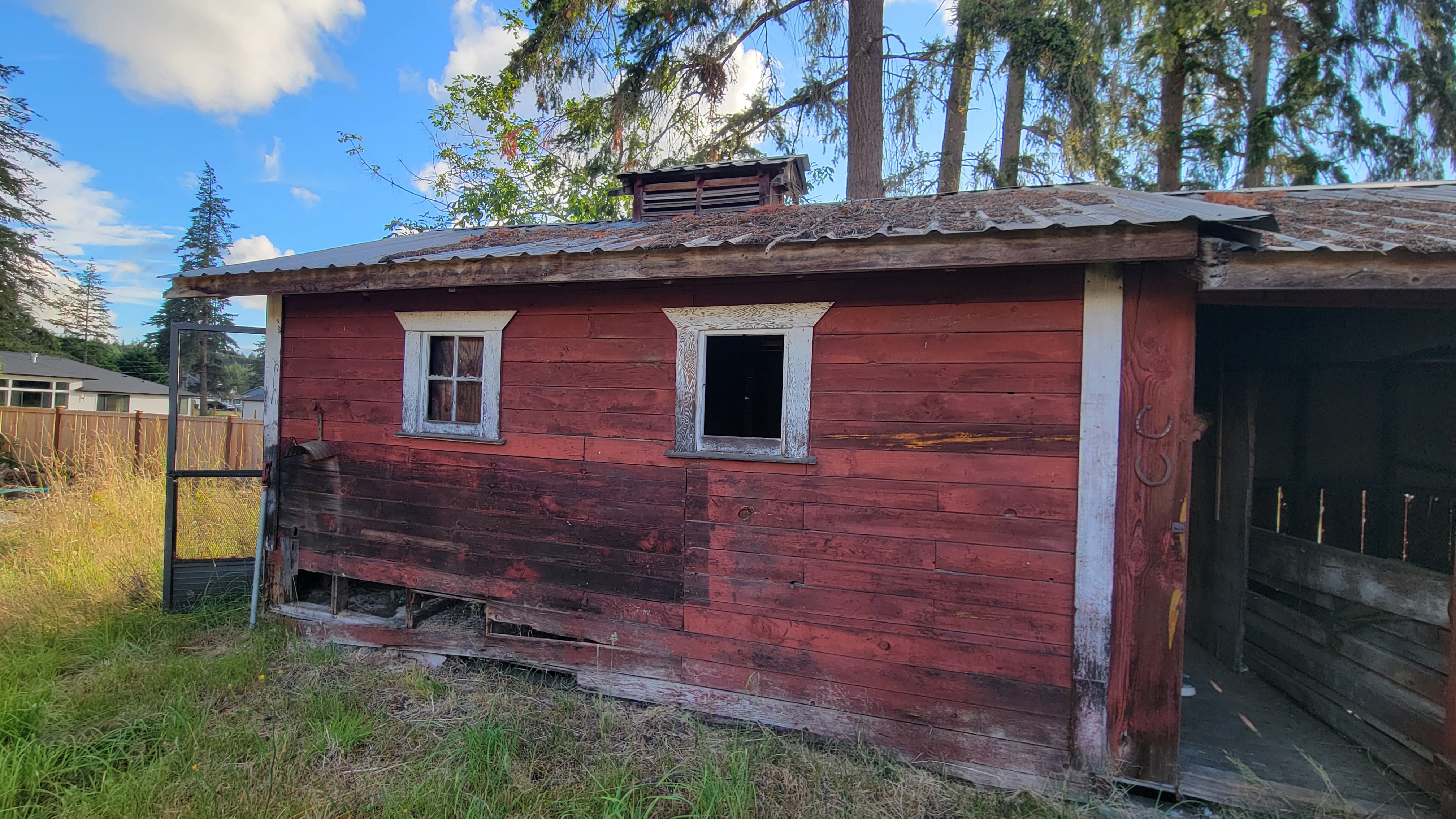
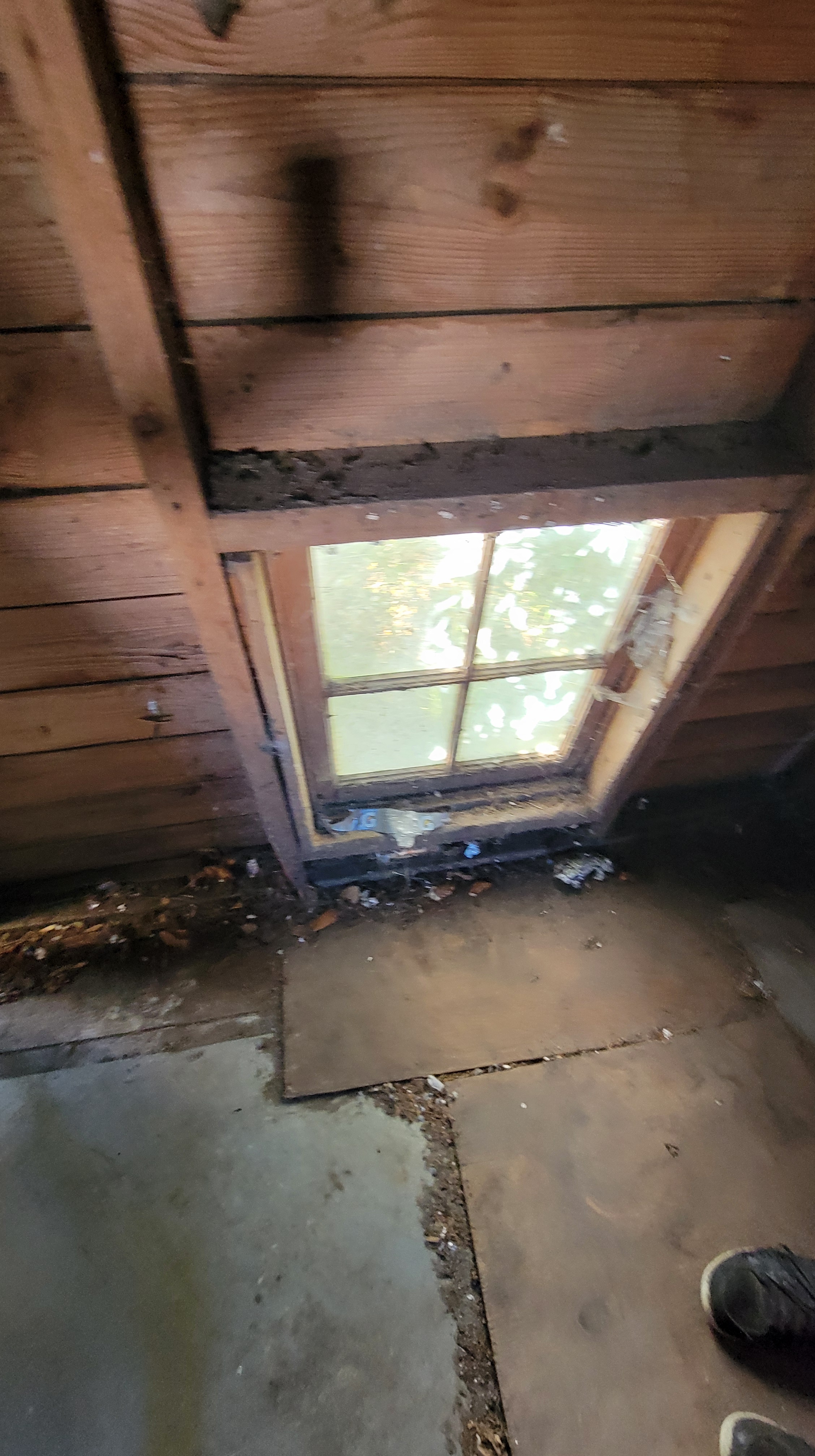
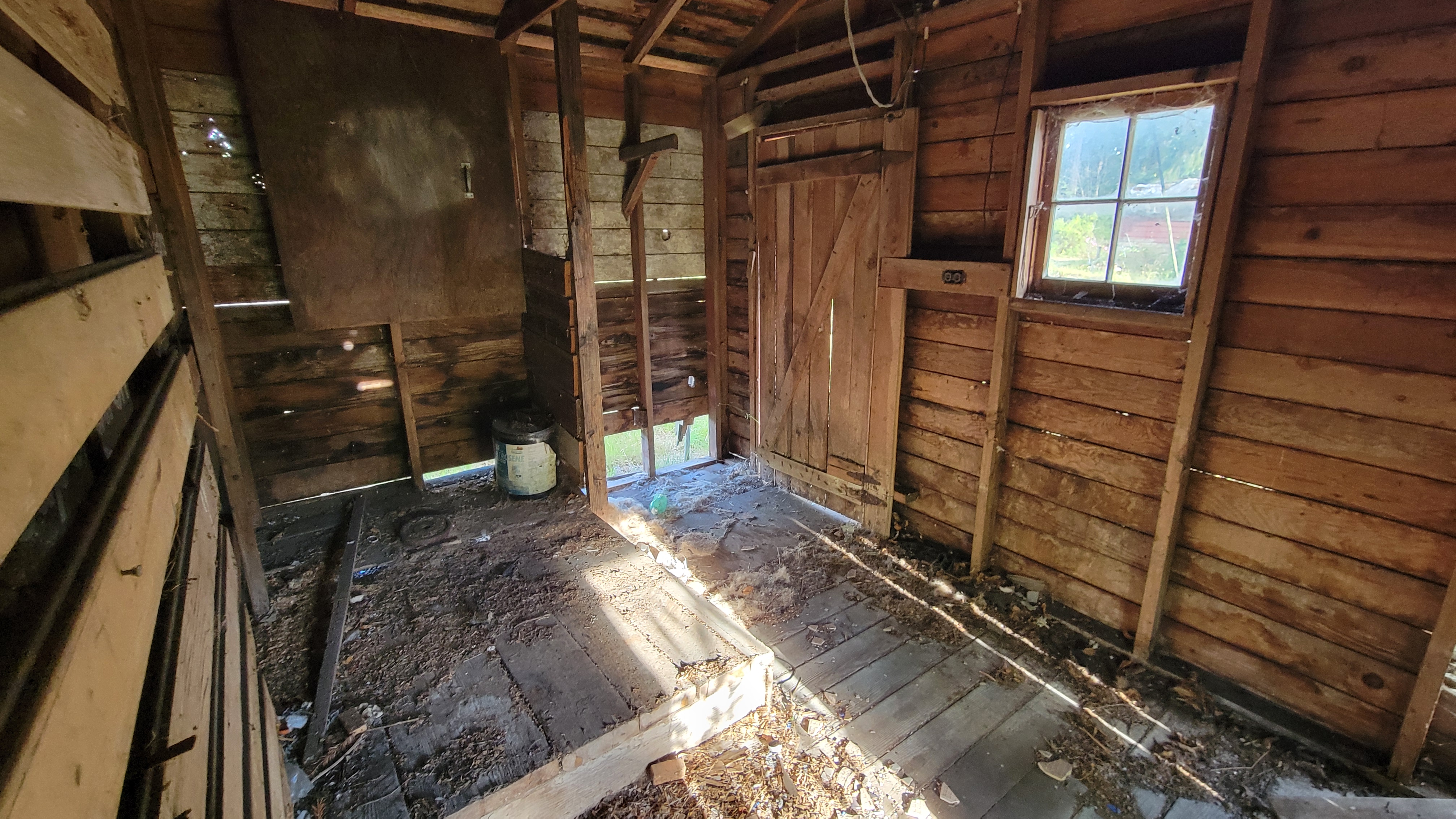
One last building that I will share from Moloch House because this one looks as old as the 1879 Clover Creek School building in Salcich Junction at the O. A. Anderson place on 50th Ave.
 Pierce Prairie Post